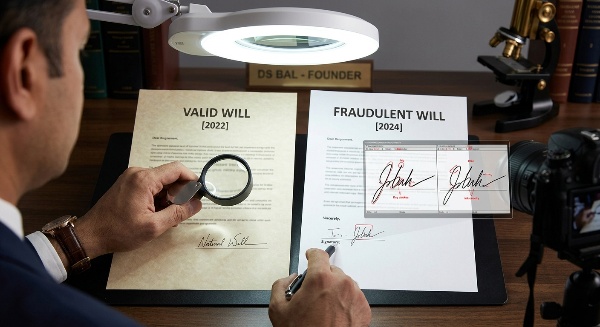
Contentious probate in 2026 refers to any legal dispute involving the administration of a deceased person’s estate or the validity of their Will. In 2026, these disputes have reached record highs due to complex blended families, rising property wealth, and the Wills Bill 2025 reforms. Most claims are settled through mandatory mediation, but high-stakes cases involving Testamentary Capacity, Undue Influence, or Proprietary Estoppel often require High Court intervention. Understanding your rights, and the strict six-month time limits for many claims, is critical to securing your rightful inheritance.

Who Are We?
CAWT is an independent service that connects you with a pre-vetted, specialist solicitor who is the perfect fit for your case. Our clients are our priority, and each case is handled with the unique approach it deserves.
Our no-win, no-fee assessment of your case guarantees that you have a smooth and stress-free process without any financial burden.
1. Why Probate Disputes are Surging in 2026
The numbers tell a stark story: by early 2026, caveat applications (legal blocks on probate) have hit an all-time high, exceeding 12,000 per year for the first time. Below are the five key drivers behind this unprecedented surge.
A. The “Frozen Threshold” & The IHT Trap
The UK government has extended the freeze on the Inheritance Tax (IHT) Nil-Rate Band at £325,000 through to 2031. Combined with the April 2026 reforms, which introduced a £1 million cap (or £2.5 million following the late 2025 softening) on previously unlimited Agricultural and Business Property Reliefs, more families than ever are facing significant tax bills.
- The Conflict: When a large portion of an estate is lost to HMRC, beneficiaries often fight over the “smaller pie” that remains.
- The Outcome: We are seeing a rise in claims where one sibling argues they should receive a larger share to offset the tax burden or to prevent the forced sale of a family asset, such as a farm or business.
B. The “Great Wealth Transfer” & Financial Dependence
An estimated £7 trillion is set to pass between generations by 2050. For “Millennial” and “Gen Z” beneficiaries in 2026, an inheritance is no longer a “luxury bonus”, it is a critical financial lifeline needed to enter the property market or clear student debt.
- High Stakes: 38% of UK adults now admit they would contest a Will if their expected inheritance fell short of their financial needs.
- Economic Pressure: The ongoing cost-of-living crisis means that being disinherited can be a “financial death sentence,” driving more people to seek legal remedies under the Inheritance Act 1975.
C. The Dementia Crisis & Capacity Challenges
With over 1 million people in the UK now living with dementia in 2026, the “Golden Rule” for solicitors (ensuring a medical report is obtained for elderly testators) is being tested like never before.
- Validity Challenges: Lack of testamentary capacity has become the #1 ground for contesting a Will.
- Predatory Marriage: We are seeing a surge in “predatory marriage” cases, where vulnerable seniors are coerced into marriage by “friends” or carers, which automatically revokes their existing Will and disinherits their children.
D. The 2026 “Blended Family” Paradox
Modern family structures have outpaced traditional inheritance laws. The rules of Intestacy (dying without a Will) still prioritize spouses and biological children, completely ignoring cohabitees and stepchildren.
- The “Second Spouse” Conflict: A common 2026 dispute involves a deceased person leaving everything to a second spouse, with the expectation they will “look after” the children from the first marriage. When that spouse later changes their Will to benefit their own biological children, the original children are left with nothing, triggering a Proprietary Estoppel or Inheritance Act claim.
E. The Rise of “Google Lawyers” and DIY Will Failures
The pandemic-era surge in DIY and online Will kits has reached its “expiry date.” In 2026, these Wills are now entering probate and failing at an alarming rate.
- Execution Errors: 14% of contested Wills in 2026 involve “technical failures,” such as incorrect witnessing or ambiguous “homemade” clauses.
- Increased Awareness: Shows like Succession and The Inheritance, alongside viral social media content about “inheritance hacks,” have made the public hyper-aware of their rights. People no longer ask if they can claim; they ask how soon they can start.
2. The Grounds for Contesting a Will
A. Lack of Testamentary Capacity (The Banks v Goodfellow Test)
This remains the most frequent ground for challenge. To have capacity, the testator must understand three things: the nature of making a Will, the extent of their assets, and the “moral claims” on their estate.
- The 2026 Reality: While the Mental Capacity Act 2005 is used for living decisions, the 1870 Banks v Goodfellow test still governs Wills. However, courts now place massive weight on “Retrospective Capacity Assessments.”
- The Evidence: We look for the “Golden Rule”, did a doctor witness the Will? If not, and the testator had a dementia diagnosis or suffered from “insane delusions” (such as a sudden, irrational paranoia about a child), the Will is likely invalid.
B. Undue Influence and Coercion
In 2026, “undue influence” has moved beyond physical threats to include psychological manipulation. To win, you must prove the testator’s free will was “overborne”, that they were essentially a “broken tool” in the hands of another.
- Actual vs. Presumed Influence: Under the Wills Bill 2025 reforms, if you can prove a “relationship of trust and confidence” and a “suspicious transaction” (e.g., a carer suddenly becoming the sole beneficiary), the burden of proof may shift to the beneficiary to prove they didn’t exert influence.
- Modern Signs: Isolation from family, a “new best friend” managing their phone/email, and sudden changes to long-standing Wills are all “Red Flags” we use to build your case.
C. Lack of Knowledge and Approval
Even if a person had the mental capacity to make a Will, did they actually understand what this specific document said?
- The “Small Print” Trap: If a Will is unusually complex, contains clerical errors, or was drafted by a beneficiary, the court’s “suspicion is excited.”
- Evidence of Want of Knowledge: If the testator was blind, illiterate, or simply very frail, and the solicitor didn’t read the Will aloud to them, the Will can be set aside. We often use “Larke v Nugus” requests to see the solicitor’s meeting notes, if there is no record of the Will being explained, you have a strong claim.
D. Forgery and the “Digital Forgery” Era
Traditional forgery involves faking a wet-ink signature. However, the Wills Bill 2025 legalized Electronic Wills, opening a new frontier for fraud.
- Traditional Forgery: We employ handwriting experts to compare the Will’s signature against known genuine samples (passports, bank cards).
- Digital Forgery: In 2026, we look for “Metadata Discrepancies.” Was the e-signature applied after the testator had passed? Was the “remote witnessing” video call faked using AI? Our team uses forensic IT specialists to verify the “Digital Audit Trail” required by the new law.
E. Lack of Valid Execution (The Wills Act 1837)
A Will is a formal legal document. If it isn’t “executed” correctly, it isn’t worth the paper (or server space) it’s written on.
- Section 9 Requirements: The Will must be in writing, signed by the testator (or at their direction), and witnessed by two people who are present at the same time.
- Dispensing Powers: Importantly, the Wills Bill 2025 gave judges a new “dispensing power.” If a Will is technically flawed (e.g., only one witness signed), the court can still rule it valid if there is “clear and settled intention.” We help you argue either for or against this power depending on your position.
3. Claims Under the Inheritance Act 1975
A. The “Reasonable Financial Provision” Test
The court’s primary objective is to determine if the Deceased made “reasonable financial provision” for you. In 2026, this is viewed through two distinct lenses:
- The Spouse Standard: For surviving spouses or civil partners, the court considers what is reasonable in all circumstances, regardless of whether it is required for their maintenance. This often mirrors what they would have received in a “divorce shadow” settlement.
- The Maintenance Standard: For all other claimants (children, cohabitees, dependants), provision is strictly limited to what is reasonable for their maintenance. In 2026, this is defined as the cost of daily living, housing, and basic financial security, rather than a “windfall” for a luxury lifestyle.
B. Who is Eligible to Claim?
To bring a claim in 2026, you must fit into one of the following six categories:
- Spouses or Civil Partners: The most protected category.
- Former Spouses/Civil Partners: Provided they have not remarried (highly relevant in the 2026 Kars v Brown ruling).
- Cohabitees: Unmarried partners who lived with the deceased for at least two years immediately prior to death.
- Children of the Deceased: Including adult children and those yet to be born.
- “Children of the Family”: Step-children or anyone treated as a child by the deceased.
- Dependants: Anyone being financially maintained by the deceased immediately before their death.
C. The Landmark Ruling: Kars v Brown [2026]
This 2026 High Court decision has redefined how we handle former spouses. In this case, Ms. Kars had divorced her husband years prior, but their financial settlement was never finalized before he died intestate.
- The “Intestacy Failure”: Because they were divorced, the rules of Intestacy left Ms. Kars with nothing.
- The Court’s Stance: The judge ruled that leaving a former spouse of 18 years with zero provision was “unreasonable,” especially given her role as a carer for their child.
- The Result: The court awarded her 50% of the family home, proving that in 2026, even long-separated former partners can win if the “financial relationship” was never truly severed.
D. The Section 3 Factors: How the Court Decides
The court does not use a “gut feeling.” It must weigh seven statutory factors (The Section 3 Factors):
- Financial Resources & Needs: Your current and future income and expenses.
- Other Beneficiaries: How a payout to you would affect those already named in the Will.
- Obligations & Responsibilities: Did the deceased have a moral or legal duty to look after you?
- Size of the Estate: A £50,000 estate is treated very differently than a £5 million one.
- Disabilities: Any physical or mental health issues faced by you or other beneficiaries.
- Conduct: Any “bad behavior” by the claimant or others that might reduce their award.
The most critical takeaway for 2026 is the strict six-month deadline. You must issue your claim within six months of the date the Grant of Probate is issued.
- Missing the Deadline: While the court has the discretion to allow late claims, it is rare and requires “exceptional circumstances.” In the 2025/2026 legal climate, ignorance of the deadline or slow solicitors are rarely accepted as valid excuses.
- The “Standstill Agreement”: In complex 2026 negotiations, we often use a “Standstill Agreement” to pause this clock while we mediate, but this must be handled with extreme care.
4. Proprietary Estoppel: The Law of “Broken Promises”
A. The Three Pillars of Estoppel in 2026
To win a Proprietary Estoppel claim, you must prove three distinct elements. In 2026, following the “tightening” of the law in cases like Maile v Maile [2025], the evidential threshold is higher than ever:
- The Assurance: A clear promise or representation was made to you that you would inherit or be given an interest in a specific property (e.g., “One day, son, all this will be yours”). In 2026, vague “family hopes” are no longer enough; we must show a serious commitment intended to be relied upon.
- Detrimental Reliance: You must have changed your life or suffered a disadvantage because of that promise. In the 2026 legal landscape, this often means working for “sub-market” wages on a family farm or giving up a lucrative career elsewhere to provide live-in care for a relative.
- Unconscionability: This is the “Moral Glue.” You must prove that it would be “shocking to the conscience of the court” to allow the estate to go back on that promise now.
B. The 2026 “Detriment” Standard
In 2026, the courts have become more sophisticated in how they calculate “detriment.” It is no longer just about unpaid hours. We now argue for “Loss of Opportunity.”
- The Winter v Winter [2024/25] Legacy: The courts now recognize that the true detriment isn’t just the low pay, but the fact that the claimant can never “unpick” 40 years of their life to start a different career.
- Countervailing Benefits: Defendants in 2026 often try to argue that the claimant received “free board and lodgings” which offsets their hard work. Our “Elite” strategy involves proving that the value of your labor and the sacrifice of your independent career vastly outweigh any “free rent” provided by the deceased.
C. Remedies: Expectation vs. Detriment
If you win, what do you actually get? Following the landmark Supreme Court ruling in Guest v Guest, the 2026 approach to remedies is flexible but cautious:
- The Starting Point: The court generally aims to fulfill your expectation (giving you what was promised).
- The Proportionately Test: However, if giving you the whole farm would be “out of all proportion” to the work you did, the court may award a monetary sum instead.
- Acceleration: If the promise was that you’d inherit “on death,” but you bring a claim while the promisor is still alive (due to a falling out), the court will “discount” the award to reflect the fact you are getting the money earlier than expected.
D. The 2026 “Generational Skip” Warning
A critical trend in 2026, highlighted by Maile v Maile, is that the court is increasingly skeptical of claims brought by grandchildren or more remote relatives.
- The Ruling: The High Court recently held that vague conversations with a grandparent are often “affectionate hopes” rather than “binding promises.”
- Our Advice: If you are a grandchild claiming estoppel, we must find independent witness testimony or “Digital Audit Trails” (emails, texts) to prove the promise was more than just a casual remark.
5. The 2026 Procedure: From Caveat to Court
A. The First Strike: Entering a Caveat
The most effective way to start a dispute in 2026 is by entering a Caveat at the Probate Registry.
- The “Freeze” Effect: A caveat stops the Grant of Probate or Letters of Administration from being issued. Without this grant, the executors cannot sell property or distribute cash.
- Duration & Cost: It costs just £3 and lasts for six months. In 2026, you can renew it as many times as necessary, provided you have a legitimate reason to continue your investigation.
- Strategic Value: It buys us the time needed to request the solicitor’s file (a Larke v Nugus letter) and obtain medical reports without the risk of the assets disappearing.
B. The “Warning” and “Appearance” Phase
If the executors believe your caveat is groundless, they can issue a Warning.
- The 14-Day Clock: Once warned, you have exactly 14 days to enter an Appearance.
- The Appearance: This is a formal statement to the court explaining your “contrary interest” in the estate. Once you enter an Appearance, the caveat becomes permanent, and the probate process is effectively locked until a judge orders its removal or the parties agree to settle.
C. Mandatory Mediation: The 2026 Mandate
One of the most significant changes in 2026 is the court’s power to compel mediation. Following the expansion of the Alternative Dispute Resolution (ADR) pilots, judges now have the express power to stay court proceedings and order parties to a mediation table.
- Cost Penalties: Under the CPR 44 amendments, if you “unreasonably refuse” to mediate, you could be ordered to pay the other side’s legal costs, even if you win the eventual trial.
- The 92% Success Rate: Modern data shows that over 90% of probate disputes settle at mediation. In 2026, we view trial as a “failure of process”, the “Elite” result is a settlement that keeps the family’s private business out of the public record.
D. Issuing the Claim (Part 7 vs. Part 8)
If mediation fails, we must formally issue the claim in the Business and Property Courts (Chancery Division).
- Solemn Form: If we are challenging a Will’s validity, we ask the court to “prove the Will in solemn form.”
- The 2026 Digital Audit: For Wills involving electronic signatures under the Wills Bill 2025, the court now requires a “Digital Audit Trail” as part of the initial evidence bundle.
E. The Trial and the Harrow v House [2025] Principle
While most cases settle, some go to a full High Court trial. A key 2025/26 precedent, Harrow v House, clarified that while procedural deadlines are strict, the court’s “overriding objective” is justice.
- The Ruling: The court held that while the six-month deadline for Inheritance Act claims is a “hard limit,” judges have a “residual discretion” to hear late claims if the delay was caused by fraudulent concealment by the executors.
- The Result: This has made executors in 2026 much more transparent, as hiding assets to run down the clock is now a high-risk strategy that rarely pays off.
6. Funding Your Fight: The 2026 Landscape
The 2026 legal market has moved away from “pay-as-you-go” hourly rates. Instead, we use a combination of risk-sharing agreements and insurance products to de-risk your claim.
A. No Win No Fee (Conditional Fee Agreements – CFA)
A CFA is a legal partnership where we share the risk of the litigation.
- The “No Win” Part: If the claim fails, you do not pay our basic legal fees. This allows you to pursue a case without the fear of a massive bill if the court disagrees with our position.
- The “Success Fee” and SRA Compliance: If you win, we charge our base fees plus a “success fee” (an agreed percentage uplift). In line with the SRA Warning Notice of January 28, 2026, we provide absolute transparency: your success fee is capped at a fair percentage of your award, ensuring you retain the vast majority of your inheritance.
B. After the Event (ATE) Insurance
In 2026, a CFA is rarely used alone. We pair it with ATE Insurance to protect you from “Adverse Costs” (the risk of having to pay the opponent’s bills if you lose).
- The “Zero-Cost” Premium: Most 2026 ATE policies are deferred and contingent. You don’t pay for the insurance upfront. If you win, the premium is paid out of your settlement. If you lose, the premium is usually “self-insured” and waived.
- Coverage: This insurance covers the opponent’s legal fees and your own disbursements (court fees, expert reports, etc.), making the process as close to “risk-free” as possible.
C. Third-Party Litigation Funding
For high-value estates (typically £1m+), we can secure funding from independent investment firms. Following the PACCAR reversal legislation of 2025/26, the litigation funding market is now highly stable.
- The Funder’s Role: They pay for everything, our fees, the barrister, and the court costs, in exchange for a share of the final payout.
- The Advantage: If the case is lost, the funder loses their money, but you owe nothing. This is the preferred choice for complex international estates or large-scale farm disputes.
D. Why We Avoid DBAs in 2026
While Damages-Based Agreements (DBAs) are common in other areas of law, the 2025 ruling in Reeves v Frain made them technically difficult for probate cases involving non-monetary assets (like a house). In 2026, we prefer the CFA model as it provides more flexibility for the “mixed remedies” often found in inheritance disputes.
For further information, check our complete no-win, no-fee guide.
FAQs
Q: Can I get No Win No Fee if the estate is small?
A: Generally, yes, provided the “prospects of success” are high (usually 60%+) and the estate value is sufficient to cover the costs. For very small estates (under £50k), we may suggest alternative dispute resolution (ADR) or fixed-fee “initial investigations” instead.
Q: What if I have “Before the Event” (BTE) Insurance?
A: Check your home insurance policy! Many 2026 policies include “Legal Expenses Cover.” If you have BTE, it may cover your costs from day one, meaning you don’t even need a No Win No Fee agreement.
Q: How do I know if my case is “fundable”?
A: Every case starts with a Merits Assessment. We look at the evidence of capacity, the strength of any promises made, and the financial needs of the claimants. If the evidence is strong, the case is an “asset” that we are happy to invest in.
Let’s Do This Together
Contesting a will could become an overwhelming experience if not accompanied by expert guidance and support. Our mission is to provide you with all the needed information, support, and authority to get through this journey, with only one goal in mind: Fairness.
To our team, this process is not about winning; it’s about claiming what was yours from the beginning.
Get your free, no-obligation case assessment. Call 08002980029 or visit contestawilltoday.com
Meet Our Founder
With over 30 years of experience across civil litigation and dispute resolution, DS Bal brings a deep, broad understanding of the legal process to every case. His background spans complex disputes involving individuals, families, and estates. LinkedIn