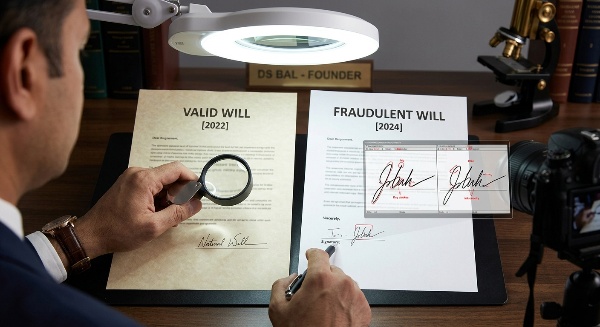
While most Will disputes focus on the testator’s mental capacity or allegations of undue influence, a Will can still be invalidated even if these elements are present. The crucial, yet often misunderstood, legal principle of “Lack of Knowledge and Approval” comes into play when a testator genuinely signs a Will, but, for various reasons, did not fully understand or approve its specific contents. This article delves into this complex area of contentious probate, explaining how this ground for challenging a Will protects beneficiaries when a testator, though capable of signing, was oblivious to the true legal effect of their final wishes. It highlights scenarios where a Will might appear valid on the surface but fails to reflect the deceased’s genuine intentions, often due to poor drafting, complex clauses, or the testator’s own vulnerabilities.
Beyond Capacity and Influence: The Third Pillar
For a Will to be valid in England and Wales, it generally needs to satisfy four key conditions:
Formalities: It must be in writing, signed by the testator, and witnessed by two people, all under Section 9 of the Wills Act 1837.
Testamentary Capacity: The testator must have had the mental ability to understand they were making a Will, the extent of their property, and who might have a claim on their estate (the “Banks v Goodfellow” test).
No Undue Influence: The testator must not have been coerced or pressured into making the Will.
Knowledge and Approval: The testator must have known and approved the contents of the Will.
It is this fourth condition, Knowledge and Approval, that often proves to be the most subtle and overlooked ground for challenging a Will. A testator might possess full mental capacity and be free from external pressure, yet still sign a document whose full implications they simply did not grasp.
The burden of proving “Knowledge and Approval” generally rests on the person seeking to uphold the Will. If a Will appears rational on its face and was executed with all due formalities, the law presumes knowledge and approval. However, this presumption can be rebutted in certain circumstances, particularly if there are “suspicious circumstances” surrounding the preparation or execution of the Will.
The “Suspicious Circumstances” Trigger
The presumption of knowledge and approval can be displaced if there are any circumstances that “excite the suspicion of the court.” These might include:
A “Homemade” or DIY Will: Wills drafted without professional legal advice are inherently more prone to errors, ambiguities, and complex language that a layperson might not fully comprehend. If the testator used a template or online service without understanding the specific legal terms, their “approval” might be questionable.
Literacy or Language Barriers: If the testator had limited literacy, poor eyesight, or English was not their first language, and the Will was not adequately explained to them, their knowledge of its contents could be challenged.
Complex Legal Drafting: Even a professionally drawn Will can be too complex for a vulnerable testator to fully grasp, especially if it involves trusts, tax planning, or intricate conditional gifts.
Significant Changes to Previous Wills: If a new Will drastically alters long-held intentions, especially if the testator was frail, unwell, or recently bereaved, this could raise suspicion.
The Beneficiary Involved in Drafting: If a major beneficiary played a significant role in preparing the Will or giving instructions to the solicitor, this is a prime “suspicious circumstance.” The court will then require the proponent of the Will to provide “the fullest and most satisfactory evidence” that the testator genuinely understood and approved its contents.
Evidence: Proving a Lack of Understanding
Proving a lack of knowledge and approval requires meticulous investigation and evidence gathering. Key strategies include:
“Larke v Nugus” Requests: A formal letter to the Will-drafting solicitor, demanding to see their complete file, including attendance notes, capacity assessments, and any correspondence regarding the testator’s instructions and explanation of the Will’s contents. This is often the “smoking gun.”
Witness Testimony: Evidence from family, friends, or medical professionals who observed the testator’s general understanding, their typical manner of communication, or their reactions to the Will’s contents.
Previous Wills: Examining earlier Wills to show a consistent pattern of testamentary intentions that was suddenly and inexplicably broken.
The Testator’s Education and Background: Understanding the testator’s typical ability to comprehend complex documents.
Expert Evidence: In some cases, a linguistics expert might be called to assess the complexity of the Will’s language relative to the testator’s known abilities.
The Emotional Weight of Doubt
For beneficiaries, contesting a Will on grounds of lack of knowledge and approval can be deeply distressing. It implies that their loved one’s final wishes, though signed, were not truly their own. This can lead to feelings of betrayal, confusion, and a profound sense of injustice. The process often involves dissecting the deceased’s vulnerabilities, which can be emotionally draining.
Our role is not only to navigate the intricate legal landscape but also to offer compassionate support, helping families understand that seeking clarity on their loved one’s true intentions is a valid and necessary part of grieving and ensuring justice. We aim to bring closure by establishing whether the Will genuinely reflected the deceased’s informed decisions.
Act Swiftly: The Importance of Discovery
The longer you wait, the harder it becomes to gather crucial evidence. Memories fade, documents get lost, and the solicitor who drafted the Will might retire. If you suspect a Will doesn’t truly reflect your loved one’s intentions due to a lack of knowledge and approval, immediate legal advice is essential.
Issuing a Caveat (A preventative measure used before probate is granted), it stops the process temporarily while disputes are reviewed. at the Probate Registry can temporarily stop the Grant of Probate, buying you time to conduct your investigations, such as submitting a “Larke v Nugus” request. Early intervention can prevent the estate from being distributed according to a flawed Will, saving immense costs and emotional distress further down the line. Remember, the law seeks to uphold a testator’s true wishes, and where those wishes are genuinely doubted, swift action is your best ally.
Let’s Do This Together
Contesting a will could become an overwhelming experience if not accompanied by expert guidance and support. Our mission is to provide you with all the needed information, support, and authority to get through this journey, with only one goal in mind: Fairness.
To our team, this process is not about winning; it’s about claiming what was yours from the beginning.
Get your free, no-obligation case assessment. Call 08002980029 or visit contestawilltoday.com
FAQs
1. Does the solicitor have to read the Will out loud to the testator for it to be valid?
It is not a strict legal requirement for the solicitor to read the entire Will aloud. However, if there are any suspicious circumstances or doubts about the testator’s understanding, a solicitor’s detailed attendance note confirming they explained the Will in simple terms, that the testator appeared to understand, and specifically approved the key clauses, would be very strong evidence against a “lack of knowledge and approval” claim. Without such a note, it becomes much harder for the estate to prove approval.
2. What’s the difference between “Lack of Knowledge and Approval” and a “Clerical Error” in a Will?
A “clerical error” (which can be rectified under Section 20 of the Administration of Justice Act 1982) is typically a simple mistake, like a typo, a missed word, or a wrong name, that everyone agrees goes against the testator’s clear instructions. “Lack of Knowledge and Approval,” however, implies the testator themselves didn’t fully grasp what they were signing, even if the words on the page were exactly what the drafter intended. It’s about the testator’s internal understanding, not just a drafting mistake.
3. Can I still challenge a Will on these grounds if the testator lived alone and had no other family?
Yes. While the presence of other family members or close friends can often provide valuable witness testimony, the absence of such witnesses doesn’t negate the potential for a claim. In such cases, the court might place greater emphasis on medical records, the solicitor’s file, or any written communications from the testator that shed light on their understanding or lack thereof. The legal principles still apply, but the burden of gathering evidence may require more extensive investigation.
contact
For a free initial conversation call
0800 29 800 29
Frequently asked questions.
Can A Will Be Contested?
Disputes over wills can arise in several circumstances, including:
Testamentary capacity: The person who made the will (known as the testator) must have had the mental capacity to understand what they were doing and the consequences of their actions. This means that they must have been able to understand the nature and extent of their property, the people they were giving their property to, and the people they were excluded from their will.
Valid execution: The will must have been executed correctly under the law. This means it must be in writing, signed by the testator, and witnessed by two independent witnesses.
Undue influence: The testator must have made the will freely and without any pressure from others. The will may be invalid if someone was unduly influenced to make a will. Undue influence can occur when someone takes advantage of a testator’s vulnerability, such as if the testator is elderly, ill, or has a mental disability.
Fraud or forgery: If the will was forged or if someone fraudulently induced the testator to make the will, the will may be invalid.
Claims against a will must usually be made within six months of the grant of probate being issued. This is the legal document that gives the executor the authority to administer the estate. If a claim is not made within this time, it may be too late to challenge the will.
As such, executors often wait until this six-month period has expired before distributing the estate. This is to avoid having to distribute the estate and then having to take it back if a successful claim is made against the will.
Here are some examples of how these disputes can arise:
A family member may dispute a will if they believe that the testator did not have the mental capacity to make a will. For example, if the testator was suffering from dementia or Alzheimer’s disease at the time the will was made.
A family member may dispute a will if they believe that it was not executed correctly. For example, if the will is not signed by the testator or if it is not witnessed by two independent witnesses.
A family member may dispute a will if they believe that they were unduly influenced to make the will. For example, if a caregiver or another family member pressured the testator to make the will in their favour.
A family member may dispute a will if they believe that it was forged or if someone fraudulently induced the testator to make the will. For example, if someone forged the testator’s signature on the will or if someone lied to the testator about the contents of the will.
If you are thinking about disputing a will, it is important to seek legal advice as soon as possible. We can assess your case and advise you on your legal options.
What are the different Types of Trusts?
Types of Trusts
Many different types of trusts can be set up, depending on your specific needs and goals. Some of the most common types of trusts include: Bare Trusts: A bare trust is a simple type of trust in which the trustee holds the assets for the benefit of the beneficiary. The beneficiary is entitled to the income and capital of the trust as soon as they are old enough to receive them.
Interest in Possession Trusts: An interest in possession trust is a type of trust in which the beneficiary is entitled to the income from the trust immediately, but not to the capital until a later date. This type of trust is often used for minor beneficiaries or for beneficiaries who are not yet responsible enough to manage their own money.
Discretionary Trusts: A discretionary trust is a type of trust in which the trustee has the discretion to decide how and when to distribute the income and capital of the trust to the beneficiaries. This type of trust is often used for families with multiple beneficiaries or beneficiaries with special needs.
Accumulation Trusts: An accumulation trust is a type of trust in which the income from the trust is accumulated and not distributed to the beneficiaries until a later date. This type of trust is often used to save for a specific purpose, such as a child’s education or a retirement fund.
Mixed Trusts: A mixed trust is a type of trust that combines elements of different types of trusts. For example, a trust may be a discretionary trust for one beneficiary and an interest in possession trust for another beneficiary.
Settlor-Interested Trusts: A settlor-interested trust is a type of trust in which the settlor (the person who creates the trust) retains some interest in the trust assets. For example, the settlor may retain the right to receive income from the trust or to appoint the trustee.
Non-Resident Trusts: A non-resident trust is a type of trust that is created and governed by the laws of a country other than the country where the settlor or beneficiaries reside. Which type of trust is right for you will depend on your specific needs and goals. It is important to consult with an estate planning attorney to discuss your options and choose the type of trust that is best for you. Here are some examples of how different types of trusts can be used: A bare trust can be used to hold assets for a minor child until they reach the age of majority.
An interest in possession trust can be used to provide income to a beneficiary who is not yet responsible enough to manage their own money.
A discretionary trust can be used to manage assets for a family with multiple beneficiaries or for beneficiaries with special needs.
An accumulation trust can be used to save for a specific purpose, such as a child’s education or a retirement fund.
A mixed trust can be used to achieve a variety of different goals, such as providing income to one beneficiary and preserving capital for another beneficiary.
A settlor-interested trust can be used to retain some control over trust assets after the settlor has created the trust.
A non-resident trust can be used to reduce estate taxes or to protect assets from creditors. It is important to note that this is just a brief overview of the different types of trusts. There are many other types of trusts available, and each type of trust has its own specific features and benefits. For more information please visit www.gov.uk/trusts-taxes/types-of-trust
What are Examples of Inheritance Trust disputes?
Inheritance trust disputes can be complex and varied, but some common scenarios include:
Disputes over the validity of the trust: This can happen if the settlor (the person who created the trust) does not have the mental capacity to create a trust, or if the trust deed was not executed correctly.
Disputes over the interpretation of the trust deed: If the trust deed is poorly drafted or unclear, it can lead to disputes between the trustees and beneficiaries about how the trust should be administered.
Disputes over the appointment or removal of trustees: Trustees have a legal duty to act in the best interests of the beneficiaries. If a trustee is not acting in the best interests of the beneficiaries, the beneficiaries may apply to the court to have the trustee removed.
Disputes over the investment of trust assets: Trustees have a legal duty to invest trust assets prudently. If a trustee makes investments that are too risky or that lose money, the beneficiaries may sue the trustee for breach of duty.
Disputes over the distribution of trust assets: Trustees have a legal duty to distribute trust assets to the beneficiaries in accordance with the terms of the trust deed. If a trustee distributes trust assets incorrectly, the beneficiaries may sue the trustee for breach of duty.
Here are some specific examples of inheritance trust disputes that have occurred in the UK:
In one case, a beneficiary disputed the validity of a trust deed on the grounds that the settlor (the person who created the trust) did not have the mental capacity to create a trust at the time it was set up.
In another case, a beneficiary sued the trustees for breach of duty after the trustees made a number of risky investments that lost money.
In a third case, a beneficiary sued the trustees for breach of duty after the trustees distributed trust assets to the beneficiaries in a way that was not in accordance with the terms of the trust deed.
Other possible disputes include:
A beneficiary was expecting more than what is set out in the trust document. This may be because the beneficiary had a reasonable belief that they would receive more, or because the trust document is unclear about the beneficiary’s entitlement.
The individual who set up the trust was provided with negligent or misleading advice. If the settlor was not properly advised about the consequences of setting up a trust, or if they were given incorrect information, they may be able to challenge the trust.
The trust document is either incomplete or unclear about the wishes of the deceased. If the trust document is incomplete or unclear, it can lead to disputes between the trustees and beneficiaries about how the trust should be administered.
A trustee acts against the best interests of the beneficiary or doesn’t administer the trust correctly. Trustees have a legal duty to act in the best interests of the beneficiaries. If a trustee breaches their duty, the beneficiaries may sue the trustee.
If you are involved in an inheritance trust dispute, it is important to seek legal advice as soon as possible. We can assess your case and advise you on your legal options.
What’s the difference between contesting a will and contentious probate?
Contesting a will is challenging the validity of a will. This can be done on a number of grounds, including.
The testator (the person who made the will) did not have the mental capacity to make a will.
The will was not executed correctly, i.e., it was not signed by the testator or witnessed by two independent witnesses.
The testator was unduly influenced to make the will.
The will was forged or fraudulent.
Contentious probate is any dispute about the administration of a deceased person’s estate. This can include disputes about
The validity of the will.
The interpretation of the will.
The appointment or removal of executors.
The distribution of the estate assets.
The management of the estate.
In the UK, contentious probate is dealt with by the High Court.
The main difference between contesting a will and contentious probate is that contesting a will is specifically challenging the validity of the will, while contentious probate can include a wide range of disputes about the administration of an estate.
Here is an example:
Contesting a will: A beneficiary challenges the validity of a will on the grounds that the testator did not have the mental capacity to make a will.
Contentious probate: A beneficiary disputes the interpretation of a will and argues that they are entitled to a larger share of the estate than they have been given.
It is important to note that the two terms are often used interchangeably. For example, a lawyer might say that they are “dealing with a contentious probate matter” when they are actually challenging the validity of a will.
If you are thinking about contesting a will or pursuing a contentious probate claim, it is important to seek legal advice as soon as possible. We can assess your case and advise you on your legal options.
How Long Do You Have to Make a Contentious Probate Claim?
The time limit for making a contentious probate claim in the UK is six months from the grant of probate. This is the legal document that gives the executor the authority to administer the estate.
If you do not make your claim within this six-month time limit, you may need to apply to the court for permission to make a late claim. The court will only grant permission if you have a good reason for not making your claim on time.
There are a number of factors that the court will consider when deciding whether to grant permission for a late claim, including:
Why did you not make your claim on time?
The strength of your case.
Whether the other beneficiaries will be prejudiced if your claim is allowed to proceed.
If the court grants you permission to make a late claim, you will need to file your claim within 28 days.
It is important to note that there are some exceptions to the six-month time limit. For example, if the executor has committed fraud or concealed assets from the beneficiaries, the beneficiaries may be able to make a claim after the six-month time limit has expired.
If you are thinking about making a contentious probate claim, it is important to seek legal advice as soon as possible. A lawyer can assess your case and advise you on the time limits that apply and whether you have a good case.
Here are some examples of when you might be able to make a late contentious probate claim:
You were not aware of the death of the deceased until after the six-month time limit had expired.
You were unable to make your claim on time because you were ill or incapacitated.
The executor has deliberately concealed information from you about the estate.
The executor has committed fraud in the administration of the estate.
The 12-year limit for making a contentious probate claim in the UK applies to claims for reasonable financial provision under the Inheritance (Provision for Family and Dependents) Act 1975. This means that if you are making a claim for financial provision from an estate, you must do so within 12 years of the date of the deceased’s death.
The reason for the 12-year limit is to encourage people to make their claims as soon as possible after the deceased’s death. This is because it can become more difficult to investigate and prove a claim after a long period of time has elapsed.
If you are unsure whether you are able to make a late contentious probate claim, you should seek legal advice.
Do I have to go to court to contest the probate?
Most disputes in the UK are resolved out of court through mediation and negotiation. This is because it is generally faster, cheaper, and less stressful for all involved.
If you are considering disputing a will, it is important to contact a contentious probate specialist before you involve any other relatives or beneficiaries of the estate. A specialist lawyer can advise you on your legal options and help you to resolve the dispute quickly and efficiently.
Here are some of the benefits of resolving a will dispute out of court:
It is faster and cheaper than going to court.
It is less stressful for all involved.
It allows you to maintain relationships with other family members and beneficiaries.
You have more control over the outcome of the dispute.
There are a number of steps that you can take to try to resolve a contentious probate dispute without going to court, including
Negotiation: You can try to negotiate a settlement with the other parties to the dispute. This may involve making concessions on your part, but it can be a good way to avoid the time and expense of court proceedings.
Mediation: Mediation is a process where an independent mediator helps the parties to reach a mutually agreeable settlement. Mediation can be a good way to resolve a dispute without going to court, but it is important to note that it is not binding on the parties.
Arbitration: Arbitration is a more formal process than mediation, and it is binding on the parties. However, it can still be a good way to resolve a dispute without going to court.
If you are unable to resolve the dispute amicably, you will need to file a claim with the High Court. The court will then hold a hearing to decide the case.