Feeling guilt contesting a will is a normal emotional response, but seeking fair provision under the Inheritance Act 1975 is your legal right, not greed. Unfair wills emotional impact can be profound, causing financial vulnerability, mental distress, and fractured family relationships. Recognising the emotional toll is crucial, as is understanding your legal standing to challenge a Will for reasonable financial provision, ensuring your true needs and the deceased’s unwritten moral obligations are met.
How it Actually Feels
The loss of a loved one plunges you into a world of profound grief. Amidst this raw sorrow, to discover that their Will has left you unfairly treated, financially vulnerable, or completely disinherited, can feel like a second, brutal blow. It’s an injustice that often ignites powerful emotions: confusion, anger, and a deep sense of betrayal.
Yet, as these feelings churn, another insidious emotion frequently surfaces: guilt. You might hear an internal voice, or even an external one, whispering, “Am I being greedy? Should I just accept it?”
We understand this profound struggle. We know that feeling guilt contesting will is a normal, almost instinctive reaction. Our empathetic approach begins with a simple truth: You are not being greedy; you are seeking fairness. You are seeking to honour the true spirit of your loved one, or to secure the financial stability you genuinely need and deserve. This article aims to validate your feelings, empower you with knowledge, and assure you that pursuing justice is a legitimate and often necessary act of self-preservation.
The Hidden Cost: Beyond the Financial Impact of Unfair Wills
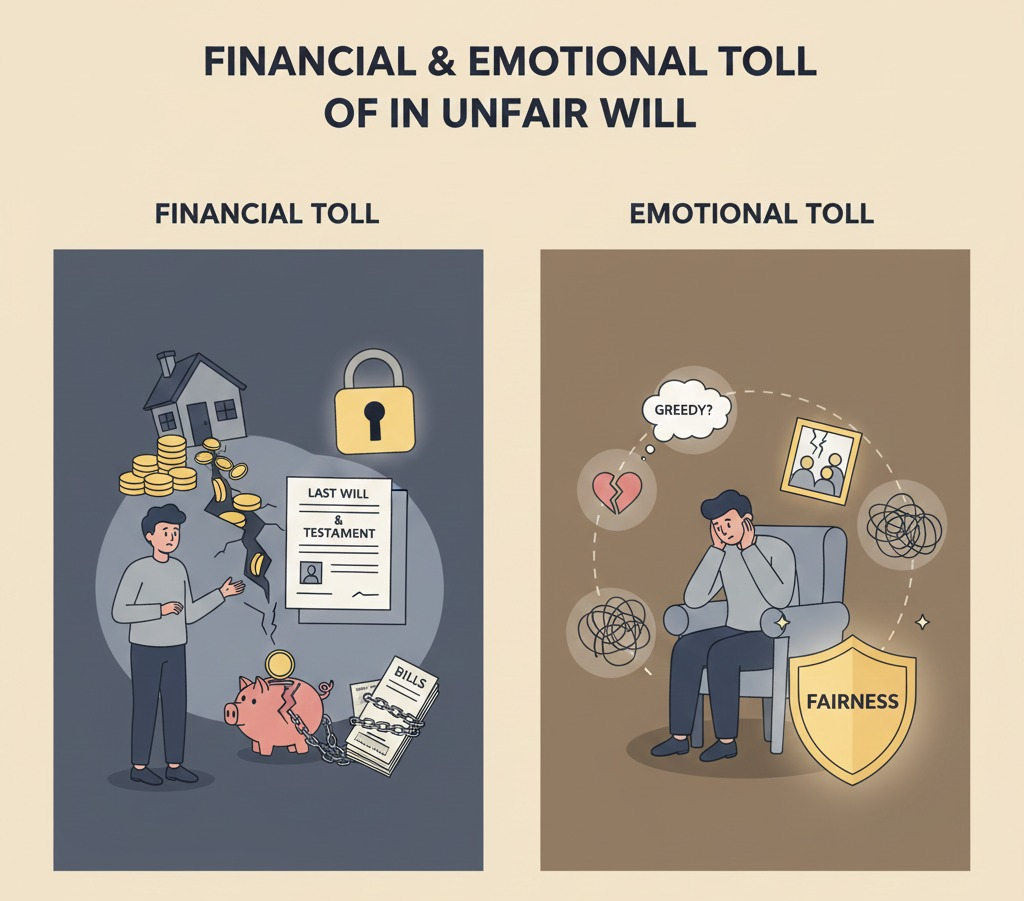
When a Will is unfair, the immediate and obvious consequence is often financial hardship. You might face:
- Housing Insecurity: Being forced to sell your home, or unable to afford mortgage payments, especially if you lived with the deceased.
- Lost Livelihood: Inability to maintain your standard of living, fund essential care, or even cover daily expenses.
- Uncertain Future: Anxiety about retirement, children’s education, or covering unforeseen medical costs without the expected inheritance.
But the toll of an unfair will emotional impact extends far deeper than pounds and pence. It can leave lasting scars that affect every aspect of your well-being.
The Emotional Landscape: Grief, Betrayal, and Invalidation
The grief following a death is complex enough. An unfair Will adds layers of specific, acute emotional distress:
- Betrayal: You may feel betrayed by the deceased, particularly if you dedicated years to their care, or if promises were made regarding your inheritance. This can profoundly complicate the grieving process.
- Invalidation: An unfair Will can feel like a public declaration that your relationship with the deceased held little value. This can be deeply invalidating, causing you to question your entire shared history.
- Anger and Resentment: Towards the deceased, the person who benefited unfairly, or even the legal system itself. This anger can be corrosive if left unaddressed.
- Anxiety and Stress: The financial uncertainty, combined with the emotional pain, can lead to overwhelming anxiety, affecting sleep, concentration, and overall mental health.
- Fractured Family Relationships: Will disputes often pit family members against each other, irrevocably damaging bonds and adding further stress to an already traumatic time.
These are not trivial feelings; they are legitimate responses to a profound injustice. They underscore why the decision to contest a Will is rarely, if ever, driven by simple “greed.”
The Guilt Trap: Why We Question Our Right to Fairness
The feeling of guilt contesting will is surprisingly common, yet profoundly misplaced. It stems from several powerful societal and personal pressures:
- “Don’t Speak Ill of the Dead”: Society often teaches us not to challenge the deceased’s final wishes, even if those wishes are demonstrably unfair or the result of manipulation.
- Fear of Being Labelled “Greedy”: No one wants to be seen as selfish, especially during a time of mourning. The idea of “fighting over money” can feel undignified.
- Family Pressure: Other family members, often those who benefit from the unfair Will, may actively shame you, reinforcing the guilt.
- Emotional Exhaustion: Grief makes you vulnerable. The sheer effort of contemplating a legal challenge can feel overwhelming, making acceptance seem like the easier path, despite the injustice.
It is crucial to recognise that this guilt is a manifestation of your desire for harmony and your reluctance to cause further distress. However, it should not prevent you from seeking justice.
Shifting the Narrative: From Guilt to Legitimate Right
The law, particularly the Inheritance (Provision for Family and Dependants) Act 1975, exists precisely because Wills can be unfair, and people can be left in vulnerable positions. This Act allows certain individuals—spouses, partners, children (both minor and adult), and dependents—to claim “reasonable financial provision” from an estate if the Will or intestacy rules failed to provide it.
Your Right to “Reasonable Financial Provision”
The term “reasonable financial provision” is key. It means the court considers:
- Your Financial Needs: Your current and future expenses, income, and resources.
- The Size of the Estate: How much wealth is actually available.
- The Deceased’s Obligations: Any moral or financial obligations the deceased had towards you.
- Your Relationship with the Deceased: The nature and length of your connection.
Crucially, this is not about taking money from someone else’s share simply because you want more. It is about ensuring you have what you reasonably need to maintain your life, often due to a long-standing dependency or a moral obligation the deceased had towards you.
The legal basis for seeking fair financial provision is deeply rooted in UK law. For further insights into the framework that supports such claims, you can explore the comprehensive information provided by the Citizens Advice Bureau on challenging a Will. This resource can help clarify the various grounds for a challenge.
Empowering Yourself: Taking the First Step
Overcoming unfair wills emotional impact and the guilt contesting will requires courage and accurate information. Your decision to seek advice is not a sign of greed; it is a sign of strength and a commitment to upholding the true intentions and responsibilities of the deceased.
- Acknowledge Your Feelings: It’s okay to feel angry, hurt, or guilty. These emotions are valid.
- Focus on Fairness, Not Fault: Frame your concern around what is fair and what reflects the deceased’s true, unpressured wishes, or their moral obligations.
- Seek Expert Advice: A specialist contentious probate solicitor can provide an objective assessment of your case, helping you understand your legal standing without judgment. They can separate the emotional from the legal.
The law exists to correct injustices, particularly when a Will does not reflect genuine wishes or leaves a dependent in hardship. Your journey to contesting a Will is ultimately a quest for resolution, dignity, and a secure future.
What About Family?
Another fear that we usually see with individuals contesting wills, is their fear of losing or breaking the family. Your feelings are valid, and we understand the family conflict that may arise from challenging a will, but let us tell you that it doesn’t have to be this way.
We combined useful tips and strategic, supportive, and professional steps for you to avoid any family conflicts during this process. Make sure to read our guide: How to Talk to Family About a Will Dispute: Turning Helplessness into Hope, for further information on how to navigate this chapter.
Honouring Their True Legacy
The emotional and financial toll of an unfair Will can be immense. Do not let feelings of guilt prevent you from seeking the justice and security you deserve. Our role is to guide you through this complex legal process with empathy and expert authority, ensuring your voice is heard and your rightful provision is secured.
You’re not being greedy; you’re seeking fairness for yourself and honouring what your loved one would truly have wanted.
If you suspect an unfair Will, contact Contest A Will Today for a confidential, compassionate discussion about your legal options. Let us help you find your path to justice. Get your free, no-obligation case assessment. Call 08002980029 or visit contestawilltoday.com
FAQs
1. Who is legally eligible to make a claim for financial provision under the Inheritance Act 1975?
The Act defines a specific list of people who can claim, extending beyond just immediate family. Eligible categories include the deceased’s spouse or civil partner, a former spouse or civil partner (who has not remarried), a child (of any age), any person treated by the deceased as a child of the family, and, crucially, any person who was financially maintained wholly or partly by the deceased immediately before death. This list ensures that those with a genuine claim to dependency or moral obligation are covered, regardless of the Will’s terms.
2. My relative’s Will includes a “No Contest” clause, threatening to disinherit me if I challenge it. Is this enforceable?
In the UK, clauses designed solely to intimidate beneficiaries into accepting an unfair Will—often called in terrorem or “no contest” clauses—are generally unenforceable in contentious probate law, particularly when the challenge is brought under the Inheritance Act 1975. The law supports the right of dependents to seek reasonable financial provision. A solicitor will assess the clause’s validity, but you should not let fear of such a threat prevent you from seeking expert advice regarding a legitimate claim.
3. Does the duration of my dependency matter if I was financially maintained by the deceased?
Yes, the nature and duration of your dependency are critical factors the court considers when assessing your claim for maintenance under the 1975 Act. The court looks closely at the financial arrangements and the length of time the deceased was providing for you. Demonstrating a long-standing, settled, and significant financial reliance strengthens your case, as it helps prove that the deceased had a continuing moral obligation to provide for your maintenance, which the Will failed to meet.