Can a beneficiary witness a will? If you have just discovered that a beneficiary witnessed the will you are dealing with, the answer to whether they can still inherit is almost certainly no. Under section 15 of the Wills Act 1837, any gift made to a person who attests the execution of a will, or to the spouse or civil partner of that person, is automatically void. The will itself remains valid, and probate can proceed, but the witnessing beneficiary loses their inheritance entirely.
This rule has been in force for nearly 190 years. Courts apply it strictly, and no amount of good intention, honest mistake, or obvious hardship will persuade a judge to reinstate the forfeited gift. It is one of the most consequential errors in English inheritance law, and it affects families every year.
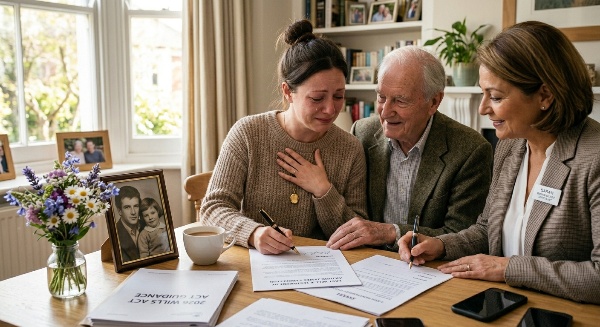
What Section 15 of the Wills Act 1837 Actually Says
The statute is unambiguous. Section 15 of the Wills Act 1837 provides that any beneficial devise, legacy, estate, interest, gift, or appointment made to an attesting witness — or to their wife or husband — shall be “utterly null and void.” The witness is still permitted to give evidence about the will’s execution, but they cannot take anything under it.
The rule exists for a reason rooted in public policy. When someone stands to benefit financially from a document, they have a powerful incentive to ensure it is signed. By stripping the gift from any witness who is also a beneficiary, the law removes that incentive and protects the integrity of the will-making process.
This distinction matters enormously in practice: the will does not fail. Only the specific gift to the witnessing beneficiary is voided. Everything else the deceased intended — every other legacy, every other appointment — remains exactly as written. But for the family member who witnesses and was named to inherit, the loss is total.
The Spouse and Civil Partner Trap
The rule extends beyond the witness themselves. If the spouse or civil partner of a beneficiary acts as a witness, the beneficiary also forfeits their gift — even though the beneficiary never touched the document.
So if a testator leaves £150,000 to their daughter and asks the daughter’s husband to witness the will, the daughter loses her £150,000. The husband receives nothing from the estate in any case, but the daughter, who did nothing wrong, is nonetheless disinherited.
This aspect of section 15 catches families by surprise more often than the direct rule itself. It applies to the relationship at the time the will was signed, not at the date of death. If a witness later marries a beneficiary after the will has been executed, the gift is safe. But if the marriage existed at the time of witnessing, the forfeiture is absolute.
One nuance worth noting: the rule currently applies to spouses and civil partners but does not extend to cohabiting partners who are not married. This has been identified as an anomaly by legal commentators — a person living with a beneficiary for twenty years but not married to them can witness the will without triggering section 15 — but as of 2026 no legislative reform has addressed this gap.
What Happens to the Forfeited Gift?
When a gift is voided under section 15, it does not simply disappear. What happens to it depends on how the will is drafted.
If the will contains a residuary clause, a provision dealing with everything not specifically gifted, the voided gift typically falls into the residue and passes to whoever is entitled to it. In many cases, that means other beneficiaries benefit from the mistake.
If the will has no residuary clause, or if the witnessing beneficiary was entitled to the entire residue, the affected share may pass under the rules of intestacy as if that portion of the estate had no will at all. The Administration of Estates Act 1925 then determines who inherits, and the result can be entirely at odds with what the deceased intended.
In practical terms, this commonly means that assets pass to relatives the deceased had no intention of benefiting, whilst the person they clearly intended to provide for receives nothing.
Are There Any Exceptions?
The rule is strict, but there are two narrow exceptions worth understanding.
The superfluous witness exception. Under the Wills Act 1968, a beneficiary’s gift is not forfeited if the will was witnessed by at least two other independent witnesses who were not beneficiaries — and the beneficiary’s signature was therefore superfluous to the will’s validity. In practice, this is rarely helpful. The vast majority of wills are executed with exactly two witnesses, so there is no independent pair to fall back on.
The secret trust exception. Where a witness is acting as a trustee under a secret trust rather than as a direct beneficiary, section 15 does not apply. This is a highly specialised area of law and is not relevant to the overwhelming majority of disputes.
Neither exception offers comfort in the typical case where a family member was asked to witness a will they were named in and the will was signed before just two people.
Can Anything Be Done After Death Is Discovered?
If the testator is still alive and the error is caught in time, the solution is straightforward: execute a new will with two independent witnesses. This revokes the defective will and the problem is resolved.
When the testator has already died, the options are considerably more limited. There is no mechanism for a court to simply restore a voided gift out of sympathy. However, there are several avenues worth exploring with a specialist solicitor:
A deed of variation. If the other beneficiaries under the will are willing, they can agree to redirect part of their inheritance to the disinherited witness-beneficiary using a deed of variation. This must be executed within two years of the date of death and requires the agreement of all affected parties. It cannot be compelled.
An Inheritance Act claim. If the disinherited witness-beneficiary is a spouse, former spouse, child, or person who was financially maintained by the deceased, they may be entitled to apply to the court for reasonable financial provision under the Inheritance (Provision for Family and Dependants) Act 1975. A strict six-month time limit applies from the date of the grant of probate, so early advice is essential.
A proprietary estoppel claim. In limited circumstances — where the deceased made a clear promise about inheritance that the claimant relied upon to their detriment — a proprietary estoppel claim may be available regardless of what the will says or fails to provide.
None of these routes is guaranteed. But for a family member who has lost a significant inheritance through what may have been a simple administrative error, taking expert advice promptly is critical.
How This Leads to Wider Family Disputes
The forfeiture of a gift under section 15 rarely happens in isolation. When an intended beneficiary discovers they have lost their inheritance — particularly if a substantial sum or the family home is involved — the result is frequently a contested estate.
Disputes commonly arise in the following ways:
Other beneficiaries who have gained from the forfeiture may be unwilling to execute a deed of variation. The disinherited family member may dispute the will’s validity on other grounds. Executors may face competing pressure from different parties. Family relationships deteriorate rapidly when the financial stakes are high.
Where the mistake was made by a solicitor who drafted or supervised the signing of the will, a professional negligence claim against that solicitor is also worth considering. A solicitor who fails to ensure that independent witnesses are used when preparing a will for execution may well have fallen below the standard of care expected of a competent practitioner.
Conclusion
Section 15 of the Wills Act 1837 is one of those provisions that operates without mercy, regardless of how innocent the mistake or how devastating the outcome. A family member who witnesses a will they are named in loses their inheritance automatically and irrevocably — with no judicial discretion to intervene.
If you have discovered this problem after a death, the time available to you to take action is limited. An Inheritance Act claim must be brought within six months of the grant of probate. A deed of variation must be completed within two years of the date of death. In either case, early specialist advice is the difference between recovering something and receiving nothing.
Contest a Will Today has more than 30 years of experience advising families on inheritance disputes across England and Wales, including cases where procedural errors in will execution have produced deeply unfair outcomes. If you believe a gift has been lost under section 15 — or that someone in your family has been disinherited through this rule — call us on +44 7901 558 530 for a free initial conversation, or visit contestawilltoday.com.
FAQs
Does the whole will become invalid if a beneficiary witnesses it?
No. This is the most common misunderstanding about section 15. The will itself remains legally valid and probate will proceed normally. It is only the specific gift to the witnessing beneficiary — or to the spouse or civil partner of the witness — that is automatically void. Every other provision in the will continues to have full legal effect.
What if the beneficiary who witnessed the will did not know they were named in it?
It makes no difference. Section 15 of the Wills Act 1837 operates as an automatic rule, regardless of the knowledge or intention of the witness. The courts have consistently refused to apply any exception based on the witness’s ignorance of their own entitlement. The forfeiture is absolute whether the witness knew they were a beneficiary or not.
Can a codicil save a gift that was voided under section 15?
Potentially yes — but only if the testator was still alive to execute it. A subsequent codicil that expressly confirms or republishes the gift, and which is properly witnessed by two independent people, can in some circumstances restore a benefit that was lost under section 15. The case of Re Trotter, Trotter v Trotter [1899] 1 Ch 764 supports this approach. However, once the testator has died, no codicil can be made, and this route is unavailable.
Meet Our Founder
With over 30 years of experience across civil litigation and dispute resolution, DS Bal brings a deep, broad understanding of the legal process to every case. His background spans complex disputes involving individuals, families, and estates. LinkedIn