How to Challenge a Will in England? Challenging a Will in 2026 involves five critical steps: lodging a caveat, gathering medical/solicitor notes (Lachesis requests), issuing a Letter of Claim, undergoing mediation, and finally, court proceedings if no settlement is reached.
Read our complete guide on contesting a will for lack of capacity.
The 2026 Legal Roadmap
In 2026, the High Court has made it clear: procedural precision is as important as the evidence itself. If you believe a Will is invalid due to lack of capacity, undue influence, or fraud, you must follow the Contentious Probate Protocol.
1. Lodge a Caveat
Immediate Stop
This is your first priority. A caveat prevents the Grant of Probate from being issued, freezing the estate. It costs £3 and lasts for six months. Without this, the executors can distribute the money, making it nearly impossible to recover later.
2. The Lachesis Request
Information Gathering
We issue a formal request to the solicitor who drafted the Will. We demand their full file, including meeting notes and any evidence of the “Golden Rule” (medical capacity checks). This often reveals if the testator was confused or pressured.
3. The Letter of Claim
Formal Allegations
Once we have the evidence, we send a formal Letter of Claim to the executors. This sets out exactly why we believe the Will is invalid. Under 2026 rules, the executors must respond within 21 days or risk being penalized in court.
4. Alternative Dispute Resolution (ADR)
The Settlement Phase
Before a trial, the court requires mediation. This is where 90% of our cases are won. We sit with a neutral mediator to negotiate a settlement, avoiding the £100k+ costs of a full High Court trial.
5. High Court Trial
The Final Verdict
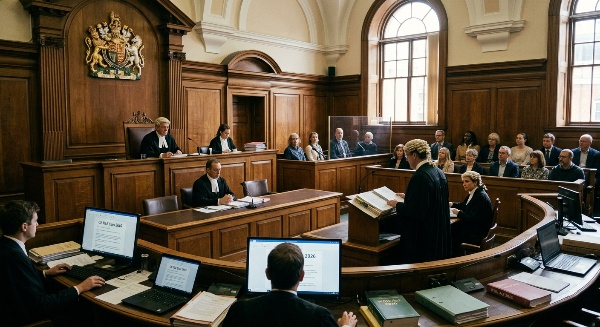
If mediation fails, the case goes to the Chancery Division of the High Court. A judge will hear witness testimony and expert evidence before making a final ruling on which Will is valid.
The “Golden Rule” and the 2026 Capacity Standard
One of the most powerful tools in a 2026 Will contest is the “Golden Rule”—a judicial guideline which suggests that when a testator is elderly or seriously ill, their Will should be witnessed and approved by a medical practitioner. If the drafting solicitor failed to obtain a contemporaneous medical report, the “presumption of validity” is significantly weakened.
We use this procedural failure to shift the burden of proof back onto the executors. In 2026, the courts have become increasingly strict; if a solicitor ignored clear signs of cognitive decline or failed to document the testator’s understanding of their assets, the Will is highly vulnerable to a Lack of Testamentary Capacity claim.
Forensic Technology and the “Digital Footprint” Audit
As we move further into 2026, many Wills are being challenged based on the testator’s digital history. If a Will was executed shortly before death, we can now use forensic digital audits—looking at GPS data, smart home logs, and browser histories—to determine the testator’s true state of mind. For example, if a testator allegedly wrote a complex Will at 2:00 PM but their smartphone data shows they were struggling with basic navigation or remained inactive during that period, it provides objective evidence for a Lack of Knowledge and Approval claim. This “digital witness” is often more persuasive to a judge than conflicting family testimonies.
The Shift in “Undue Influence” Standards
Proving Undue Influence has historically been the hardest path in UK law because it required proof of “coercion”—essentially a metaphorical gun to the head. However, in 2026, the courts are beginning to recognize “predatory marriage” and subtle psychological manipulation as valid grounds for setting aside a Will.
We now look for patterns of “isolation”: Has a new partner or neighbor suddenly blocked family members from visiting? Have they taken over the testator’s finances? By proving a pattern of dependency and isolation, we can build a case for “fraudulent calumny,” where the influencer poisoned the testator’s mind against their rightful heirs with false stories.
Using “CE-File” Transcripts to Spot Forgery
With the mandatory use of the HMCTS CE-File system in 2026, all probate documents are stored in high-resolution digital formats. This has revolutionized how we handle forgery claims. Specialized handwriting experts can now use AI-assisted pressure-point analysis on digital scans to detect “unnatural hesitations” in a signature that the human eye might miss.
If the signature on the Will doesn’t match the testator’s historical “wet-ink” signatures on passports or bank deeds from the same period, we can file a criminal referral alongside the civil claim, often forcing a settlement before the first hearing.
The Rise of “Proprietary Estoppel” in 2026
Many 2026 disputes aren’t about whether the Will is valid, but whether it is fair based on past promises. Proprietary Estoppel is the “claim of the decade.” It applies when a parent promised a child an inheritance—such as a family farm or business—and the child worked for low wages or stayed at home based on that promise. If the Will then leaves that asset to someone else, the court can “estop” (stop) the executors from following the Will.
In 2026, these claims have a high success rate because they focus on decades of factual history rather than the testator’s mental state on one specific day.
The Role of the “Joint Expert” in Mediation
In the 2026 litigation landscape, we rarely go to trial without a Single Joint Expert (SJE) report. This is a court-appointed expert (usually a geriatric psychiatrist or a handwriting specialist) whose opinion is neutral. Once the SJE issues their report, the “winner” of the dispute is usually revealed. If the SJE concludes that the testator likely lacked capacity, the executors’ solicitors will almost always advise them to settle.
This is why our 2026 strategy focuses heavily on the selection of the SJE; the right expert can turn a three-year court battle into a one-day mediation success.
Tactical Use of “Cost Warnings” and Part 36 Offers
A major part of our 2026 arsenal is the Part 36 Offer. This is a formal settlement offer that carries a “sting” if rejected. If we offer to settle for 50% of the estate and the executors refuse, only for a judge to later award us 51%, the executors may be ordered to pay penalty interest and all our legal costs from the date of the offer.
This tactical maneuver puts immense pressure on executors to be reasonable. In 2026, where legal fees can easily reach six figures, a well-timed Part 36 offer is often the catalyst that brings a stubborn opponent to the negotiating table.
The 2026 “Lachesis” Standard for Solicitor Negligence
Finally, if a Will is found invalid because of a solicitor’s mistake—such as failing to ensure the witnesses were present or losing the original document—the claim doesn’t stop there. In 2026, we can pursue the drafting solicitor’s professional indemnity insurance for the lost inheritance.
This is often the best outcome for families, as it ensures the beneficiaries get their money without “draining” the actual estate assets. We use a Lachesis Request to audit the solicitor’s file for these specific errors, effectively turning a Will contest into a professional negligence claim that is paid by an insurer rather than a relative.
Let’s Do This Together
Contesting a will could become an overwhelming experience if not accompanied by expert guidance and support. Our mission is to provide you with all the needed information, support, and authority to get through this journey, with only one goal in mind: Fairness.
To our team, this process is not about winning; it’s about claiming what was yours from the beginning.
Get your free, no-obligation case assessment. Call 08002980029 or visit contestawilltoday.com
FAQs
1. Can I stop the distribution of assets while I investigate a claim?
Yes. The most critical step is lodging a Caveat with the Probate Registry. In 2026, this costs just £3 and prevents a Grant of Probate from being issued for six months. This effectively “freezes” the estate, ensuring the executors cannot distribute funds or sell property while your solicitors gather evidence.
2. What if the original Will is missing or was destroyed?
Under 2026 rules, if an original Will cannot be found, there is a legal presumption that the testator destroyed it with the intent to revoke it. To challenge this, you must provide “strong and clear” evidence that it was lost accidentally or destroyed without the testator’s consent. We often use digital backups or solicitor affidavits to prove the Will’s contents and seek a court order to prove a copy.
3. Am I too late to contest if probate has already been granted?
Not necessarily, but you are in a much weaker position. Once a Grant of Probate is issued, you generally have six months to bring a claim under the Inheritance (Provision for Family and Dependents) Act 1975. If you are challenging the validity of the Will (e.g., forgery or lack of capacity), there is technically no fixed time limit, but the court may refuse your claim if the assets have already been distributed to innocent beneficiaries.
Meet Our Founder
With over 30 years of experience across civil litigation and dispute resolution, DS Bal brings a deep, broad understanding of the legal process to every case. His background spans complex disputes involving individuals, families, and estates. LinkedIn