In 2025, the greatest threat to a valid Will isn’t a shaky pen; it’s an algorithm. With the rise of AI handwriting synthesis and “pen-plotting” technology, “perfect” forged Wills are appearing in the Probate Registry. This guide explores how families are using Digital Forensics to fight back AI forgery, the limitations of traditional experts, and why the Wills Bill 2025 is introducing new safeguards to combat high-tech fraud.
The New Face of Fraud
For nearly 200 years, the “wet ink” signature was the gold standard of truth. If a signature looked like your father’s, the law assumed it was. But as we reach the end of 2025, the game has changed. Fraudsters are now using “generative handwriting” AI, software that can study a single birthday card from ten years ago and produce a “new” signature that is indistinguishable to the human eye.
This is a terrifying prospect for families. You might know in your heart that your mother would never have signed a Will leaving everything to a “new friend,” but if the ink looks perfect, how do you prove it’s a fake?
Digital Forensics vs. The Human Eye
In 2025, the traditional handwriting expert is being joined by Digital Forensic Examiners. Traditional experts look at the shape of letters; modern forensic experts look at the physics of the pen.
When a human signs a name, there are natural variations in pressure and speed. An AI-guided plotter or a high-end printer creates a signature with robotic uniformity. Under a high-powered microscope, a forged 2025 Will often reveals:
The “Robot Pause”: Microscopic ink blobs where the machine hesitated.
Uniform Pressure: A lack of the natural “light and dark” strokes that come from a human hand pressing harder on a downstroke.
The Wills Bill 2025 Safeguards
To counter this, the Wills Bill 2025 (currently moving through Parliament following the May 2025 Law Commission report) proposes that for Wills made electronically, a “biometric handshake” or a time-stamped digital certificate must accompany the signature. If you are contesting a Will you suspect is an AI forgery, your first step must be to secure the original paper document before it can be tampered with.
Let’s Do This Together
Contesting a will could become an overwhelming experience if not accompanied by expert guidance and support. Our mission is to provide you with all the needed information, support, and authority to get through this journey, with only one goal in mind: Fairness.
To our team, this process is not about winning; it’s about claiming what was yours from the beginning.
Get your free, no-obligation case assessment. Call 08002980029 or visit contestawilltoday.com
FAQs
1. Can I use a regular magnifying glass to spot an AI forgery?
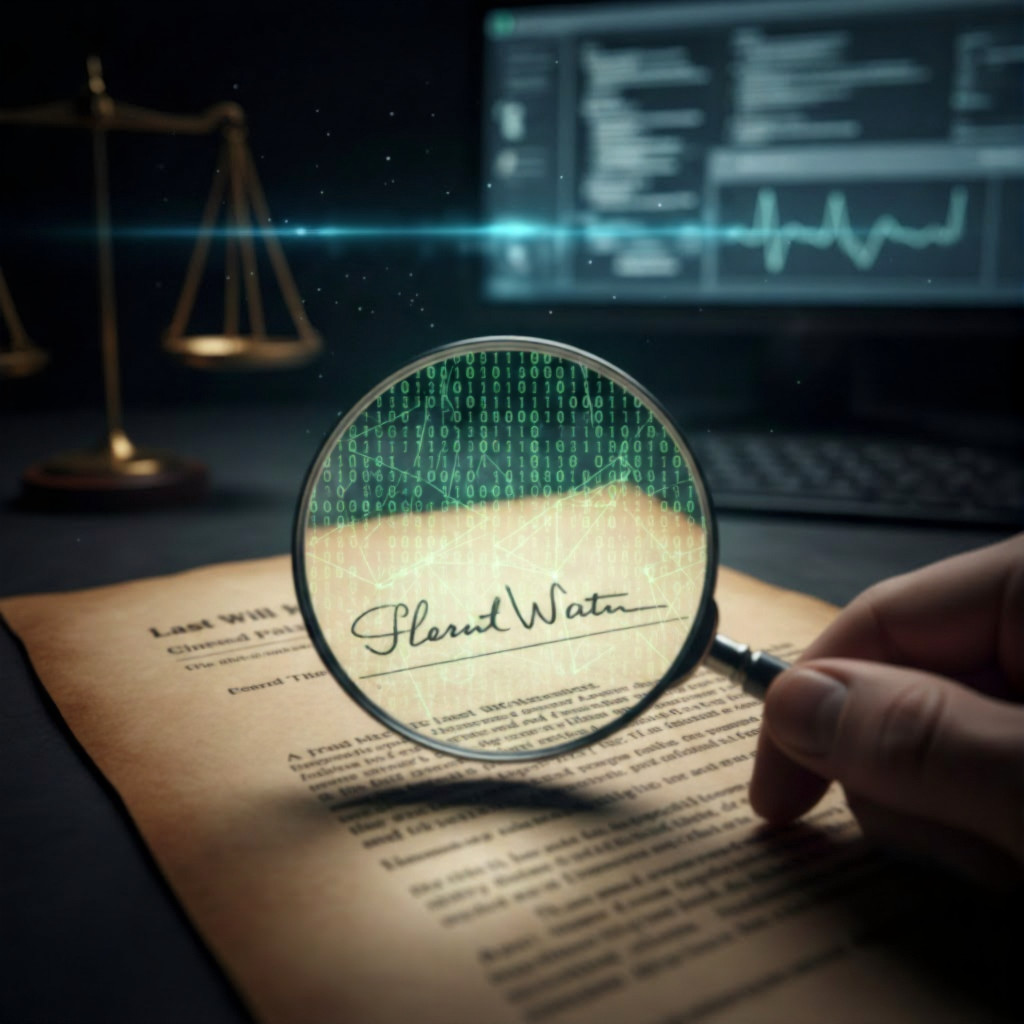
Probably not. High-end AI forgeries in 2025 use “pen plotters” that use real ink on real paper. To the naked eye, it looks perfect. You need a forensic expert using VSC (Video Spectral Comparator) technology to see the “mapping” lines underneath the ink that the AI used to guide the pen.
2. If the witnesses say they saw him sign it, can I still claim it’s an AI forgery?
Yes. In 2025, we are seeing cases of “collusive forgery” where the witnesses are in on the scam. If the forensic evidence proves the signature is robotic, the witnesses’ testimony will be discarded, and they may face criminal charges for perjury.
3. Does the 2025 Law Commission reform help with this?
Yes. The 2025 reforms suggest a move towards Biometric Wills for those who want extra security. By using a thumbprint or facial scan at the time of signing, a testator can “lock” their Will, making it nearly impossible for an AI to forge the intent behind the document.
contact
For a free initial conversation call
0333 800 2929
Frequently asked questions.
Can A Will Be Contested?
Yes, a will can be contested if there are valid legal grounds to challenge its validity.
What are the different Types of Trusts?
There are several types of trusts used in estate planning, each serving a different purpose depending on your goals.
What are Examples of Inheritance Trust disputes?
Breach of Trust: Mismanagement of assets by the trustee.
Trustee Removal: Conflicts leading to the removal of a trustee.
Interpretation: Disagreements over the trust’s legal wording.
Undue Influence: Pressure on the creator to change trust terms.
Financial Claims: Beneficiaries claiming they haven’t received their fair share.
What’s the difference between contesting a will and contentious probate?
Contesting a Will:
This specifically refers to challenging the validity of the will itself.
Common grounds include claims that the deceased lacked mental capacity, the will was forged, or they were under “undue influence” when signing it.
Contentious Probate:
This is a broader term that covers any dispute arising after someone’s death during the administration of the estate.
Do I have to go to court to contest the probate?
No, you do not always have to go to court. Most probate disputes are resolved through:
Mediation: A professional mediator helps both sides reach an agreement without a judge.
Negotiation: Solicitors from both sides negotiate a fair settlement privately.
Settlement Agreements: A legal contract is signed to end the dispute outside of court.
Court as a Last Resort: Litigation is only used if all other attempts to settle fail.