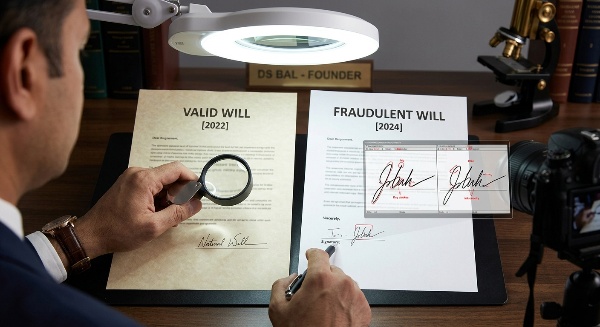
Undue influence in probate occurs when a testator’s free will is “overborne” by another person, resulting in a Will that does not reflect their true intentions. Unlike lack of capacity, the testator knows what they are signing, but their decision is coerced, manipulated, or fraudulently induced. Proving it requires demonstrating actual coercion, as mere persuasion or kindness is insufficient.
Undue Influence: The Skeptic’s Ultimate Test of Authenticity
For “The Skeptic,” undue influence is often the last, most elusive piece of the puzzle. The testator may appear rational, even articulate, yet the Will’s provisions are inexplicable. This is where we stop looking at the testator and start looking at the influencer.
As a validity specialists, we understand that undue influence is about control, not confusion. It’s about someone so dominating the testator’s mind that their Will is no longer their Will.
Defining “Undue Influence” in UK Law: More Than Mere Persuasion
The legal bar for proving undue influence is exceptionally high. The challenger must prove “coercion”, that the testator’s free will was overborne. This doesn’t mean physical violence; it can be subtle, psychological pressure.
The key distinction:
- Permissible Persuasion: “You should leave me something, I’ve always been good to you.” (Generally allowed).
- Undue Influence: “If you don’t change your Will to give me everything, I will put you in a home/never speak to you again/tell everyone your secret.” (Coercion).
The legal precedent from Hall v Hall (1868) states, “To make a good Will, a man must be a free agent.” Our job is to prove that freedom was stolen.
The Evidentiary Challenge: Proving the “Unprovable”
Unlike lack of capacity (which relies on medical evidence), undue influence is almost always proven circumstantially. The “influencer” rarely leaves a paper trail.
We meticulously build a case by looking for patterns and unexplained shifts:
- “Smoking Gun” Behavior: Sudden isolation of the testator from other family.
- Unusual Secrecy: The new Will is drafted in secret, often with a new solicitor.
- Radical Departure: Disinheritance of long-term beneficiaries without clear, rational explanation.
- Dependence: The testator was highly dependent on the influencer for care, finances, or social interaction.
This is a forensic investigation into human relationships.
The “Susceptibility” Factor: Was the Testator Vulnerable?
While undue influence is about the influencer’s actions, the testator’s vulnerability is a critical component. We look for:
- Physical or Mental Frailty: An elderly testator, suffering from depression, grief, or early-stage dementia, is more susceptible. (Note: This is not a lack of capacity, but a heightened vulnerability to pressure).
- Emotional Dependence: A testator recently bereaved or profoundly lonely.
- Financial Dependence: The influencer controls the testator’s bank accounts or daily expenses.
The more susceptible the testator, the less overt the coercion needs to be.
Identifying the “Manipulator’s Playbook”: Common Tactics
Manipulators often follow a pattern. We look for:
- Isolation: The influencer systematically prevents other family members from seeing or speaking to the testator. Phone calls go unanswered; visits are blocked.
- Gaslighting: Making the testator doubt their own memory or sanity, often undermining trust in others.
- Fear and Threats: Implied or explicit threats of abandonment, institutionalization, or revealing embarrassing secrets.
- False Accusations: Spreading lies about other beneficiaries to poison the testator’s affections.
- Creating a “Crisis”: Exaggerating the testator’s needs or the failures of others to create an urgent need for the influencer’s intervention.
The “Solicitor’s Duty”: Red Flags Missed
Even when a solicitor drafts the Will, they can be an unwitting participant in undue influence. Our investigation focuses on whether the solicitor:
- Met the Testator Alone: Crucial to ensure no one was “hovering” during instructions.
- Asked Open-Ended Questions: To gauge true intent, not just “yes/no” answers to leading questions.
- Followed the Golden Rule: If the testator was vulnerable due to age/illness, a medical assessment should have been sought (linking back to Cluster 2).
- Noted Any Suspicions: A diligent solicitor would document concerns about a dominant companion or unusual instructions.
If these duties were not met, the solicitor’s file becomes a key piece of evidence.
Lodging a Caveat: Halting the Influencer’s Next Move
If you suspect undue influence, the immediate action is to lodge a Caveat with the Probate Registry. This prevents the Grant of Probate from being issued, halting the distribution of assets and giving us time to gather evidence. This stops the “influencer” from liquidating assets and making the problem irreversible.
Financial Abuse as a Precursor to Undue Influence
Often, financial abuse is the “training ground” for undue influence. If the influencer already controlled the testator’s finances, had access to bank accounts, or exerted pressure over daily spending, it establishes a pattern of dominance that makes proving undue influence more straightforward. We meticulously trace financial transactions to demonstrate this pattern of control.
For further understanding of safeguarding vulnerable adults, you can refer to the Office of the Public Guardian’s guidance on financial abuse. Additionally, a deeper dive into the legal principles can be found in academic papers accessible via legal databases, often referencing key cases on undue influence.
Reclaiming the True Will
Undue influence is a dark corner of probate, but it is not unassailable. For “The Skeptic” who sees a Will that simply doesn’t make sense given the testator’s lifetime relationships, our role is to shine a light on the unseen manipulation. We fight to ensure the deceased’s true last wishes are honored, not those of a dominant third party.
The Doctrine of “Fraudulent Calumny”
While many are familiar with the concept of coercion through force, a more insidious form of undue influence is known in UK law as Fraudulent Calumny. This occurs when a person “poisons” the testator’s mind by casting dishonest aspersions on the character of a natural beneficiary.
One of the strongest indicators of undue influence is the role the beneficiary played in the mechanics of the Will’s creation. As “The Skeptic,” we ask: Who chose the solicitor? Who transported the testator to the meeting? Who paid the legal fees? In many contested cases, we find that the influencer “vetted” the solicitor or sat in the waiting room during the meeting. We treat this as Third-Party Facilitation, which creates a “suspicious cloud” over the document. If the beneficiary was the primary point of contact for the law firm, it suggests the solicitor was receiving a “filtered” version of the testator’s wishes. We use these procedural overlaps to argue that the solicitor was never truly in a position to verify the testator’s independence, effectively neutralizing the solicitor’s testimony.Unlike simple coercion, the testator is not forced into signing; rather, they are systematically lied to until they choose to disinherit someone based on a false reality. As a Validity Specialist, we look for evidence of these “whispering campaigns.” If we can prove that the beneficiary made false claims about you to the deceased, and that those claims were the sole reason for your disinheritance, the Will can be set aside as a product of fraud.
The “Nodal Point” of Influence: Identifying the Tipping Point
In complex litigation, we look for the “Nodal Point”, the specific moment when a testator’s susceptibility met an influencer’s opportunity. This often occurs during a period of “transient vulnerability,” such as immediately following a hospital discharge or the death of a long-term spouse. At this point, the influencer doesn’t need to use overt threats; they simply use “excessive persistence” at a time when the testator lacks the emotional energy to resist.
We analyze the timeline of the Will’s creation against the testator’s medical and personal history. If the Will was changed during a window of extreme grief or physical weakness, the “presumption of free will” is significantly compromised, allowing us to argue that the document is a reflection of the influencer’s persistence rather than the testator’s preference.
The Forensic Analysis of “Third-Party Facilitation”
One of the strongest indicators of undue influence is the role the beneficiary played in the mechanics of the Will’s creation. As “The Skeptic,” we ask: Who chose the solicitor? Who transported the testator to the meeting? Who paid the legal fees? In many contested cases, we find that the influencer “vetted” the solicitor or sat in the waiting room during the meeting.
We treat this as Third-Party Facilitation, which creates a “suspicious cloud” over the document. If the beneficiary was the primary point of contact for the law firm, it suggests the solicitor was receiving a “filtered” version of the testator’s wishes. We use these procedural overlaps to argue that the solicitor was never truly in a position to verify the testator’s independence, effectively neutralizing the solicitor’s testimony.
Let’s Do This Together
Contesting a will could become an overwhelming experience if not accompanied by expert guidance and support. Our mission is to provide you with all the needed information, support, and authority to get through this journey, with only one goal in mind: Justice.
To our team, this process is not about winning; it’s about claiming what was yours from the beginning.
Get your free, no-obligation case assessment. Call 08002980029 or visit contestawilltoday.com
Don’t forget to check our Complete Guide to Lack of Capacity for more in-depth information.
FAQs
Q1: Can undue influence be proven if the testator had full mental capacity?
Absolutely. Undue influence is entirely distinct from lack of capacity. A testator can be mentally sharp but still have their free will overborne by threats, constant badgering, or extreme emotional pressure. The focus is on the influencer’s actions, not the testator’s cognitive ability.
Q2: What kind of evidence is needed to prove undue influence?
Since direct evidence is rare, we rely on circumstantial evidence. This includes witness statements from family or friends about isolation, changes in the testator’s personality, unusual financial transactions, discrepancies between the testator’s stated intentions and the final Will, and the solicitor’s attendance notes. A consistent pattern of manipulative behavior is key.
Q3: Is kindness or caregiving considered undue influence?
No, not typically. Simply being kind, providing care, or even actively persuading a testator (without coercion) to change their Will is usually considered legitimate interaction. The line is crossed when the influence becomes so strong that the testator’s own wishes are completely suppressed, and they are left with no genuine choice but to comply. It’s the difference between suggestion and subjugation.