Understanding the difference between lodging a Caveat and making a formal Claim is critical when contesting a Will in the UK. A Caveat is a swift, inexpensive tool that pauses the Grant of Probate for six months, buying crucial time for investigation. In contrast, a formal Claim (particularly under the Inheritance Act 1975) must be issued in court within six months of the Grant of Probate, and this statutory deadline is non-negotiable. Confusing these two actions or delaying beyond these strict timeframes significantly jeopardises your ability to challenge an unfair Will, making immediate expert legal advice essential.
When the news arrives that a loved one has passed, and their Will appears to be deeply flawed or unjustly excludes you, the world can feel like it’s spinning out of control. In that moment of profound grief and confusion, you might hear conflicting advice or encounter complex legal jargon: “Lodge a Caveat,” “Make a Claim.” It’s easy to feel overwhelmed, but understanding the precise difference between these two critical legal actions is paramount.
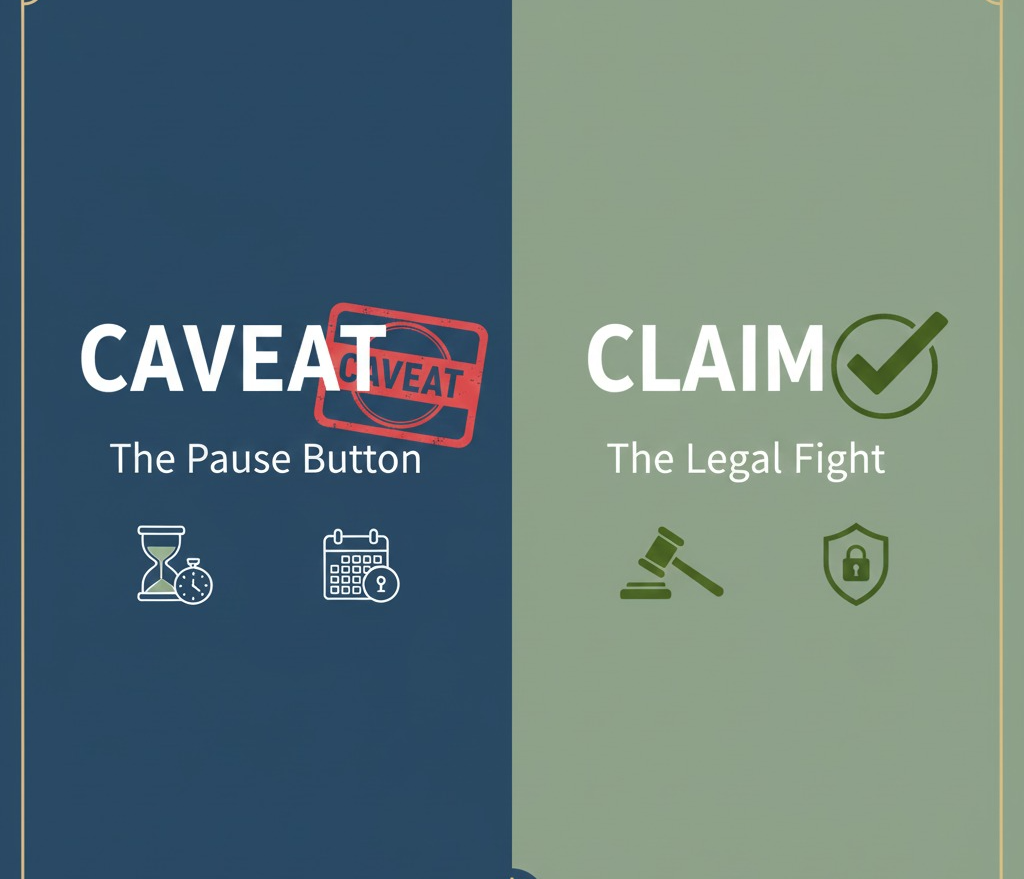
Let’s be clear: A Caveat buys you invaluable time by pausing the probate process. A formal legal Claim, however, must be filed within a strict six-month deadline from the Grant of Probate. Don’t confuse these two distinct, yet interconnected, steps. Missing this crucial distinction, or simply delaying, is the single greatest threat to your ability to challenge an unfair Will effectively.
We operate with the unwavering understanding that in contentious probate, time is not your friend. Our empathetic and authoritative guidance ensures you know exactly when and how to act, empowering you to navigate these complex waters with confidence and secure the justice you deserve.
The Starting Gun: What is the Grant of Probate?
Before diving into Caveats and Claims, it’s vital to grasp the role of the Grant of Probate. This is the official legal document issued by the Probate Registry that:
- Confirms the validity of the Will.
- Gives the Executor named in the Will the legal authority to manage and distribute the deceased’s assets (property, bank accounts, shares, etc.).
Without this Grant, an Executor typically cannot access significant assets. Crucially, once the Grant is issued, the Executor has the full legal power to start distributing the estate. This is why pausing the Grant is so important.
The Pause Button: What Exactly is a Caveat?
Imagine you’re watching a potentially fraudulent transaction unfold, and you have the power to hit a giant pause button. That’s essentially what a Caveat does in the context of probate.
Caveat: A Temporary Stop Sign
A Caveat is a formal notice lodged with the Probate Registry that prevents the issue of a Grant of Probate (or Letters of Administration) for a period of six months.
- Purpose: Its primary function is to buy you time. It halts the Executor in their tracks, preventing them from accessing or distributing the estate’s assets while you investigate the Will’s validity or prepare your formal claim.
- Cost-Effective & Swift: Lodging a Caveat is intentionally inexpensive (currently £3) and can be done quickly. This accessibility ensures that financial barriers don’t prevent immediate action.
- Renewable: A Caveat lasts for six months but can be renewed indefinitely, provided you have a genuine reason for doing so (e.g., ongoing investigation, negotiations).
When to Lodge a Caveat (URGENTLY)
You should consider lodging a Caveat the moment you have serious concerns about a Will, such as:
- Suspecting Undue Influence (the deceased was coerced).
- Doubting the deceased’s Mental Capacity when the Will was made.
- Believing the Will was not properly signed or witnessed.
- Being unfairly disinherited and intending to make a claim for reasonable financial provision.
For comprehensive, official guidance on how to lodge a Caveat and other aspects of stopping probate, the GOV.UK website provides detailed information on stopping a probate application. This resource is an invaluable starting point for understanding the formal procedures.
The Legal Battle: What Exactly is a Claim?
While a Caveat is a defensive administrative step, a formal Claim is an offensive legal action. It is the substantive challenge to the Will or the distribution of the estate.
Claim: A Formal Legal Challenge
A Claim is a full legal case brought before the courts, arguing that the Will is invalid or that you are entitled to a share of the estate despite the Will’s terms (or lack thereof).
- Purpose: To achieve a specific legal outcome, such as:
- Having the entire Will declared invalid (e.g., due to lack of capacity or undue influence).
- Obtaining an order for “reasonable financial provision” from the estate under the Inheritance (Provision for Family and Dependants) Act 1975.
- Cost & Complexity: Claims are significantly more complex and potentially costly than lodging a Caveat, involving solicitors, barristers, court appearances, and extensive evidence gathering.
- Statutory Deadline: This is the most crucial difference: a claim, particularly one under the 1975 Act, is subject to extremely strict statutory deadlines.
The NON-NEGOTIABLE Six-Month Deadline
If you are making a claim for reasonable financial provision under the Inheritance Act 1975 (e.g., as a spouse, child, or financial dependent who was unfairly excluded), you must issue your claim in court within six months of the date the Grant of Probate (or Letters of Administration) was issued.
- Strict Adherence: This deadline is not flexible. While courts have discretion to allow late claims in exceptional circumstances, they rarely do so, especially if there’s no good reason for the delay or if the estate has already been distributed.
- The Clock Starts Ticking: It is essential to remember that the six-month clock for making an Inheritance Act claim starts only once the Grant of Probate has been issued (Read more about it in our guide: Contest a Will After Probate Has Been Granted)
- . The Caveat merely delays the start of this clock, giving you vital time to prepare your claim so you can file it correctly once the Grant is eventually obtained (either by agreement or by court order).
The legal framework for these claims is detailed in the Inheritance (Provision for Family and Dependants) Act 1975 itself. Understanding the specifics of this Act is paramount for any potential claimant.
Why Time is NOT Your Friend: The Perils of Delay
Confusing a Caveat with a Claim, or simply delaying action, carries severe risks:
- Estate Distribution: If you don’t lodge a Caveat quickly, the Grant of Probate may be issued, and the Executor can immediately begin distributing assets. If this happens, you might have to try and recover money directly from beneficiaries, which is much more challenging.
- Missing the Six-Month Deadline: This is the most catastrophic error for Inheritance Act claims. Once the six months from the Grant of Probate have passed, your legal right to claim is almost certainly lost.
- Evidence Disappearing: The longer you wait, the harder it becomes to gather crucial evidence (e.g., witness statements from those who knew the deceased’s mental state, medical records before they are archived).
Empowering Your Path to Justice: Act Now
The legal landscape of contesting a Will is complex, but your primary concern should always be immediate action.
- If you have doubts about a Will’s validity or fairness, lodge a Caveat without delay. This is your immediate shield.
- Then, seek specialist legal advice immediately to determine the strength of your formal Claim and to ensure it is prepared and filed within that critical six-month statutory window once the Grant of Probate is issued.
You don’t have to navigate this overwhelming process alone. Our empathetic, authoritative team is here to guide you, transforming your anxiety into a clear, decisive strategy. We ensure you understand the critical difference between a Caveat and a Claim, empowering you to protect your rights and seek the justice you deserve.
Don’t let time run out on your claim. Get your free, no-obligation case assessment. Call 08002980029 or visit contestawilltoday.com
FAQs
1. What is the “Warning” process, and what happens after the Executor issues one?
When an Executor wishes to proceed with probate despite your Caveat, they issue a formal legal document called a “Warning” to you (the Caveator). This is the point where the dispute moves from an administrative pause to a formal legal fight. You then have 14 days to either “Enter an Appearance” (formally state your legal grounds for objecting to the Will) or allow the Caveat to expire. Receiving a Warning requires immediate action and specialist advice, as your response officially frames your legal case.
2. Can I still lodge a Caveat if my loved one died without a Will (Intestacy)?
Yes, a Caveat is not restricted to stopping a Grant of Probate for a Will. If your loved one died without a Will, the court issues Letters of Administration (LoA). You can lodge a Caveat to stop the Grant of LoA if you believe the person applying is not the correct administrator (for instance, if you believe you have a higher priority to administer the estate) or if you intend to make an Inheritance Act claim against the estate’s distribution under the Rules of Intestacy.