Stealing from an estate is both a criminal offence (theft/fraud) and a civil “breach of trust.” Penalties in 2026 include custodial sentences of up to 10 years, personal liability to repay the estate with interest, and immediate removal as executor.
Read our complete guide on contesting a will for lack of capacity.
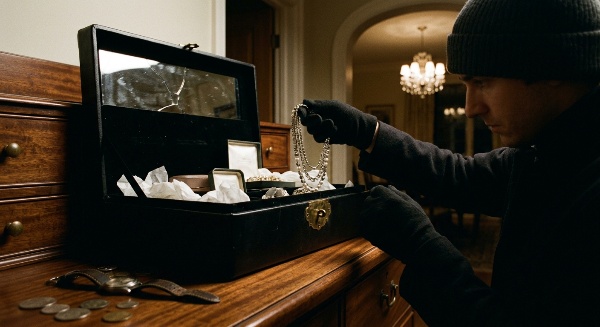
The Double Jeopardy: Civil vs. Criminal
In 2026, the “theft” of inheritance is treated with extreme severity by the courts. When an executor or a family member takes money that doesn’t belong to them, they face two distinct legal fronts.
1. The Criminal Front (The Fraud Act 2006)
If an executor intentionally misappropriates funds, they are committing Fraud by Abuse of Position. In 2026, the sentencing guidelines have tightened; for thefts exceeding £100,000, the “starting point” for a judge is a 3-to-4 year custodial sentence, with a maximum of 10 years for sophisticated frauds.
2. The Civil Front (Devastavit)
Even if the police do not prosecute, the beneficiaries can sue the thief in civil court. Under the principle of Devastavit, the person must:
- Repay every penny stolen.
- Pay statutory interest (usually 8% above base rate) on the stolen amount.
- Pay the indemnity legal costs of the beneficiaries—meaning they pay for your solicitor too.
The “Asset Freeze” 2026: If we suspect an executor is stealing, we can apply for a Freezing Injunction within hours. This locks their personal bank accounts and prevents them from selling their own home until the estate’s money is returned.
The “Constructive Trust” and Asset Tracing
In 2026, if an executor uses estate funds to purchase a personal asset—such as a vehicle or a deposit on a second home—that asset is legally subject to a Constructive Trust. This means that even though the title may be in the executor’s name, the law views the estate as the true owner.
We use specialized forensic accountants to perform “tracing” into the executor’s personal bank accounts. If we can prove the money came from the estate, we can obtain a court order to seize the asset directly or place a charge on the executor’s property to ensure the beneficiaries are repaid in full.
Criminal Prosecution: The Fraud Act 2006
While many inheritance disputes remain civil, “stealing” often crosses into Fraud by Abuse of Position (Section 4 of the Fraud Act). In 2026, the Crown Prosecution Service (CPS) is increasingly willing to prosecute executors who intentionally hide assets or forge accounts.
A conviction carries a maximum of 10 years in prison. For beneficiaries, a criminal conviction provides a “shortcut” to recovery: the court can issue a Compensation Order as part of the sentencing, which bypasses the need for a separate (and expensive) civil trial to get your money back.
The 2026 “Freezing Injunction” (Mareva Order)
If there is strong evidence that an executor is actively draining an estate or preparing to move funds offshore, we can apply for a Freezing Injunction. This is a “nuclear” legal option that immediately locks the executor’s personal and business bank accounts.
In 2026, these are often granted ex parte (without the executor being present) if there is an urgent risk of dissipation. The penalty for breaching a freezing order is Contempt of Court, which can lead to immediate imprisonment, even before the actual theft case is decided.
Personal Liability for Legal Fees (Indemnity Basis)
A massive deterrent in 2026 is how the courts handle legal costs in theft cases. Normally, executors can use estate funds to pay their legal fees. However, if an executor is found to have acted dishonestly, they lose this right entirely.
They must pay their own legal bills out of their own pocket and are typically ordered to pay the beneficiaries’ costs on an “Indemnity Basis.” This is the highest level of cost recovery, often forcing the dishonest executor to pay 90-95% of your total legal spend.
Common “Stealing” Scenarios in 2026
| Scenario | Legal Consequence | 2026 Recovery Method |
| “Borrowing” Funds | Breach of Fiduciary Duty | Summons for Account: Force immediate repayment with 8% interest. |
| Undervalue Sales | Negligence / Devastavit | Surcharge: The executor pays the difference from their own pocket. |
| Hiding Digital Assets | Fraud | Search Order: Court-ordered forensic imaging of laptops/phones. |
| Emptying the House | Theft | Injunction: Court order to return specific “personal chattels.” |
FAQs
1. Is it “stealing” if I’m an executor and I take my share early?
Yes. An executor has no right to distribute any money to themselves until all debts, taxes, and other legacies have been settled. Taking your share early is technically a “preferential distribution” and can lead to your immediate removal and a court order to return the funds.
2. What if the executor says the money was a “gift” from the deceased?
The burden of proof in 2026 lies with the person claiming the gift. If there is no written evidence or independent witness to the gift, the court will likely treat it as a “lifetime transfer” that must be brought back into the estate (known as Hotchpot).
3. How do I prove an executor is stealing?
The first step is a Request for Estate Accounts. If they refuse or provide “vague” summaries, we apply for a Court Order for Accounts. This forces them to disclose bank statements under penalty of perjury. Any discrepancy discovered at this stage is usually enough to trigger a removal claim.
Meet Our Founder
With over 30 years of experience across civil litigation and dispute resolution, DS Bal brings a deep, broad understanding of the legal process to every case. His background spans complex disputes involving individuals, families, and estates. LinkedIn