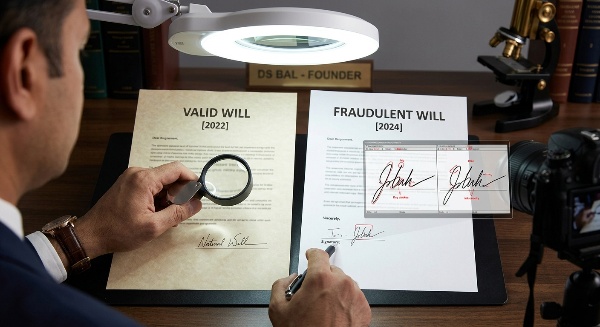
Undue Influence in 2026 is legally defined as “coercion that overpowers the volition of the testator.” Following the landmark 2024 Court of Appeal ruling in Rea v Rea and the 2026 House v Helme principles, the High Court has signaled a lower tolerance for “predatory beneficiaries.” While “mere persuasion” is legal, the moment a parent changes their Will “for the sake of a quiet life” or out of fear of abandonment, the Will becomes invalid.

Why Contest A Will Today?
In 2026, the #1 reason for “shattered legacies” in the UK isn’t a lack of money; it is the psychological manipulation of elderly parents. As digital Wills become standard under the Wills Bill 2025, the opportunities for “behind-closed-doors” coercion have multiplied.
At Contest a Will Today, we specialize in the “Elite” forensic investigation of Undue Influence. If your parent’s final Will feels like someone else’s voice, you aren’t just looking at an “unfair” document; you are likely looking at a legal nullity.
1. The “Gatekeeper” Protocol (Isolation)
Pressure cannot exist in a vacuum. To influence a parent, a bad actor must first remove the “competing voices” of other loved ones.
- The 2026 Red Flag: A carer or sibling begins managing your parent’s smartphone, “filtering” their WhatsApp messages, or claiming the parent is “too tired” for visitors.
- The Legal Trigger: In Jones v Jones [2023/24], the court found that isolating a mother from her other children created a “vivid picture” of coercion. If your parent was blocked from seeing family shortly before a Will change, the court views this as a deliberate attempt to dominate their decision-making.
2. Fraudulent Calumny (The “Poisoned Ear”)
This is a specific legal ground where an influencer tells lies about other family members to “poison” the parent’s mind.
- The Red Flag: A parent who was previously loving suddenly becomes cold or hostile toward you, often repeating specific, false accusations (e.g., “I heard you’re only waiting for me to die so you can sell the house”).
- The 2026 Evidence: We now look for “Digital Calumny”, emails or texts sent by the influencer to the parent that contain disparaging lies. If the parent acted on these lies to disinherit you, the Will can be struck out even if the parent was mentally “sane.”
3. The “Deathbed” Digital Pivot
With the rise of 2026 e-Wills, we see a surge in “last-minute” changes made via tablet or laptop.
- The Red Flag: A parent with severe physical frailty or terminal illness suddenly executes a complex new Will just days or hours before death.
- The Metadata Check: If the Will was drafted using the parent’s account but the typing speed or “digital footprint” matches the beneficiary’s habits rather than the parent’s, this is a “smoking gun” for pressure.
4. Suspicious Solicitor Selection
In an “Elite” legal process, a parent should use their lifelong family solicitor.
- The Red Flag: The influencer bypasses the parent’s regular solicitor and takes them to a new firm, or uses an online “DIY” kit, where the solicitor has no knowledge of the family history.
- The “Golden Rule” Failure: If the beneficiary was present in the room during the legal instructions, or if the solicitor failed to see the parent alone to check for pressure, the Will’s validity is compromised.
5. The “Unnatural” Disposition
A Will should make sense. If it departs radically from a lifetime of stated intentions, it is “unnatural.”
- The Red Flag: A parent who always promised to “treat the children equally” suddenly leaves 90% to a “new friend” or one child who has recently “moved in.”
- The Explanatory Gap: In 2026, the High Court asks: “Is there any other reasonable explanation for this change?” If the only reason for the change is the “convenience” of the person now inheriting, the court will likely infer undue influence.
Proving the “Unprovable”: The 2026 Evidential Audit
Because pressure happens behind closed doors, we use a “Circumstantial Web” to win:
- Medical Vulnerability: Proving the parent was susceptible to pressure (e.g., suffering from “pleasing behavior” due to early-stage Alzheimer’s).
- Larke v Nugus Letters: Forcing the drafting solicitor to reveal who paid for the Will and who gave the instructions.
- Dependency Logs: Proving the parent relied on the influencer for food, medication, or mobility, making them “fearful” to disagree.
Undue influence is the most difficult claim to prove but the most satisfying to win. If you see two or more of these signs, do not wait for Probate to be granted.
FAQs
Q1: Isn’t it “my word against theirs” if there were no witnesses to the pressure?
Not anymore. The 2024/25 rulings confirmed that judges can look at the “entirety of the circumstances.” If you can show a pattern of isolation, a sudden change in the Will, and a vulnerable parent, the court can infer undue influence without a “confession” from the influencer.
Q2: What is the difference between “persuasion” and “coercion”?
Persuasion is legal. You can say, “I’ve looked after you for 10 years, I think I deserve the house.” Coercion is illegal. It is saying, “If you don’t give me the house, I’m moving out and you’ll have to go into a home tomorrow.” If the parent feels they have no choice, it is coercion.
Q3: Can I contest the Will while my parent is still alive?
Technically, no, a Will only speaks from death. However, in 2026, you can apply to the Court of Protection to challenge a Power of Attorney or ask for a Statutory Will if you believe a “predatory” person is currently manipulating your living parent’s finances.
Let’s Do This Together
Contesting a will could become an overwhelming experience if not accompanied by expert guidance and support. Our mission is to provide you with all the needed information, support, and authority to get through this journey, with only one goal in mind: Fairness.
To our team, this process is not about winning; it’s about claiming what was yours from the beginning.
Get your free, no-obligation case assessment. Call 08002980029 or visit contestawilltoday.com
Read our full guide on how to contest a will in 2026 and arm yourself with the needed knowledge!
Meet Our Founder
With over 30 years of experience across civil litigation and dispute resolution, DS Bal brings a deep, broad understanding of the legal process to every case. His background spans complex disputes involving individuals, families, and estates. LinkedIn