When an estate is insolvent in England and Wales, all assets are distributed to creditors in a strict statutory order of priority under the Insolvency Act 1986. Beneficiaries receive nothing until every creditor has been paid in full. If assets run out before all debts are settled, the remaining debts are written off.
Read our complete guide on contesting a will for lack of capacity.
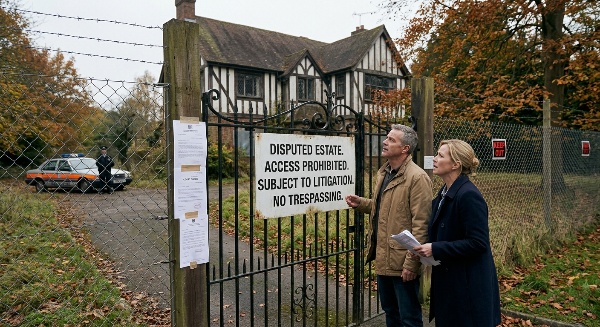
What Happens When an Estate Is Insolvent?
When an estate is insolvent — meaning the deceased’s debts exceed the value of their assets — beneficiaries receive nothing. Every asset in the estate must be applied to paying creditors in a strict statutory order of priority before any legacy or share of the residue can be distributed. If the assets run out before all the debts are settled, the remaining debts are simply written off. The creditors cannot pursue the deceased’s family members, and the beneficiaries cannot receive anything until every creditor ahead of them in the queue has been paid in full.
This is the stark reality that families face when a loved one dies with significant debts. Understanding what happens next — and whether any options remain — is critical.
What Makes an Estate Insolvent?
An estate is insolvent when the total value of the deceased’s liabilities exceeds the total value of their assets at the date of death. Common causes include:
- Outstanding mortgage balances that exceed the value of the property
- Unsecured personal loans, credit card debts, and overdrafts
- Tax liabilities owed to HMRC, including unpaid income tax or capital gains tax
- Business debts where the deceased traded as a sole trader
- Care home fees that were not covered by the estate’s liquid assets
- Personal guarantees given for another party’s debts that have been called in
An estate can also become effectively insolvent during administration if assets are sold at a lower value than anticipated, if unexpected debts come to light, or if the costs of administering a complex estate consume funds that would otherwise have been available for distribution.
The Statutory Order of Priority
When an estate is insolvent, the Administration of Estates Act 1925 and the Insolvency Act 1986 govern the order in which creditors are paid. The personal representative — whether an executor named in the will or an administrator appointed by the court — must follow this order strictly. Departing from it can result in personal liability.
The order of priority is as follows:
1. Secured creditors — creditors holding a charge over a specific asset, such as a mortgage lender with a charge over the deceased’s property. The secured asset is applied to the secured debt first. If the asset realises more than the debt, the surplus falls back into the estate. If it realises less, the shortfall ranks as an unsecured debt.
2. Funeral expenses — reasonable funeral and burial or cremation costs rank ahead of all other unsecured claims. The personal representative should take care to keep these proportionate; extravagant expenditure may not be recoverable from the estate.
3. Testamentary and administration expenses — the costs of obtaining probate or letters of administration, professional fees incurred in administering the estate, and other proper costs of the administration rank next.
4. Preferential debts — these are defined by the Insolvency Act 1986 and currently include certain arrears of wages owed to employees of the deceased (up to the statutory limit) and contributions to occupational pension schemes.
5. Ordinary unsecured creditors — general unsecured creditors, including banks, credit card companies, utility providers, HMRC for ordinary tax debts, trade creditors, and any other person to whom the deceased owed money without security. All creditors in this category share equally in proportion to their debts if there is insufficient money to pay them all in full.
6. Deferred debts — debts owed to the deceased’s spouse or civil partner in limited circumstances rank last among the creditors.
7. Beneficiaries — only after every creditor in every category above has been paid in full can any distribution be made to beneficiaries. In a genuinely insolvent estate, this point is never reached.
All liabilities in a category must be settled before moving to the next. If funds run out partway through a category, the available money is divided equally amongst all creditors in that category on a pence-in-the-pound basis.
What Happens to the Will?
A will does not become invalid simply because the estate is insolvent. The document remains legally effective and the executor named in it retains authority to administer the estate. However, the gifts and legacies in the will cannot be honoured if there are insufficient assets to pay the debts first. Even a specific gift — “I leave my car to my son” — may have to be sold to meet creditor claims if the estate has no other assets.
Where there is no will, an administrator is appointed under the intestacy rules, but the same order of priority applies. The intestacy rules that would normally determine who inherits are irrelevant if the estate is insolvent — the creditors take everything.
The Personal Representative’s Duties and Risks
When an estate may be insolvent, the personal representative faces significant personal risk if they do not handle the administration correctly.
A personal representative who distributes assets to beneficiaries before all debts have been paid — or without first advertising for creditors — may become personally liable to creditors who subsequently come forward. According to The Gazette, if a deceased estates notice is not placed and a creditor comes forward after the estate has been distributed, the personal representative may face personal liability for unidentified debts.
The correct protective steps include:
Placing a deceased estates notice in The Gazette. This formally advertises the death and invites creditors to submit their claims within a specified period — currently two months. A personal representative who waits for this period to expire before distributing the estate is protected against unknown creditors who did not come forward in time.
Obtaining professional valuations of all assets. Accurate valuations are essential to establishing whether the estate is solvent or insolvent before any distribution is made.
Not distributing any assets until all debts are identified and the priority order is applied. Even small gifts or transfers of personal belongings with monetary value should be withheld until the estate’s solvency has been confirmed.
Considering whether to renounce. A personal representative may wish to take care not to intermeddle in an estate if there is a possibility that the estate is insolvent from early on. They may wish to take legal advice on whether it is in their best interest to renounce, rather than fulfil, their role as executor or administrator. Once a personal representative is deemed to have intermeddled, they may be required to fulfil their role and administer the entire estate.
Can Family Members Be Pursued for the Deceased’s Debts?
This is one of the most common concerns raised by grieving families, and the answer is generally no. Unpaid creditors cannot pursue family members unless those family members were joint account holders, guarantors, or co-signatories. The debts are simply written off once estate funds are exhausted.
There are, however, important exceptions. A family member who held a joint bank account with the deceased may find the balance has been reduced by the bank to meet the deceased’s share of joint debts. A person who gave a personal guarantee for the deceased’s business debts can be pursued directly. Anyone who inherited assets from the estate and then transferred them before creditor claims were settled may face recovery action.
The key principle is that a deceased’s debts die with the estate, not with the family — unless the family member personally assumed responsibility for those debts during the deceased’s lifetime.
Is a Will Challenge Still Worth Pursuing if the Estate Is Insolvent?
This is a question that deserves a careful and honest answer, because the instinct for many families is to challenge the will regardless — particularly where they suspect misconduct or unfairness.
In a genuinely insolvent estate, a successful will challenge is unlikely to produce a financial benefit for the challenger, because there are no assets available to distribute after the creditors have been paid. Challenging the will does not affect the creditors’ priority or reduce the debts. If the estate is insolvent, the result of a successful challenge is simply that the estate is administered differently — but still for the benefit of creditors, not beneficiaries.
However, there are circumstances where a challenge remains worthwhile even in an apparently insolvent estate:
The insolvency may not be as clear-cut as it appears. Preliminary valuations are sometimes understated. Assets that were given away shortly before death — inter vivos gifts — may be recoverable. Jointly owned property may be capable of being brought back into the estate under section 9 of the Inheritance Act 1975. A thorough investigation may reveal that the estate has more value than the initial picture suggests.
A will validity challenge may have consequences beyond the estate itself. In some cases, challenging a will opens the door to claims against third parties who benefited improperly — for example, where assets were transferred to a third party through undue influence or fraud during the deceased’s lifetime. These claims are separate from the estate administration and are not affected by the estate’s insolvency.
An Inheritance Act claim may still be viable in limited circumstances. The Inheritance (Provision for Family and Dependants) Act 1975 allows claims against the net estate — and the net estate is what remains after debts are paid. In a fully insolvent estate, the net estate is zero, which means an Inheritance Act claim will produce no recovery. However, where the estate is borderline — where the assets exceed the debts by a modest margin — an Inheritance Act claim may still secure provision for a qualifying applicant from what little remains.
The honest advice is this: take specialist legal advice before committing resources to a will challenge where insolvency is in issue. The analysis requires a proper assessment of the true value of the estate, the nature and enforceability of the debts, and whether any assets can be recovered into the estate before the conclusion is that a challenge is futile.
Frequently Asked Questions
Does a mortgage count against the estate when calculating whether it is insolvent?
Yes. A mortgage is a secured debt and is treated as a liability of the estate. When calculating whether an estate is solvent or insolvent, the outstanding mortgage balance is counted against the value of the property securing it. If the property is worth more than the mortgage, the surplus is an asset of the estate. If the property is worth less than the mortgage — negative equity — the shortfall is an unsecured debt that ranks with the other ordinary unsecured creditors. In practice, a mortgage lender will typically sell the property under its powers as a secured creditor and apply the proceeds to the outstanding balance. The deceased’s family members are not personally liable for the shortfall unless they were co-borrowers or guarantors.
Can a creditor take the family home if it is in the deceased’s sole name?
Yes, if the property forms part of the insolvent estate and is needed to meet the creditors’ claims. If the property was held in the deceased’s sole name, it forms part of the estate and is available to creditors in the order of priority. A secured creditor — typically the mortgage lender — can enforce its charge and sell the property to recover the debt. Unsecured creditors can apply to the court for an order for sale if no other assets are available to meet their claims. If the property was jointly owned, only the deceased’s share forms part of the estate. The co-owner’s share is not available to the deceased’s creditors, although practical arrangements for selling or transferring the property will need to be made.
What should a beneficiary do if they suspect the estate is being mismanaged by the executor?
A beneficiary has the right to require the executor to produce an account of the estate’s assets, liabilities, and administration. If the executor is failing to follow the correct priority order, distributing assets to beneficiaries before creditors are paid, or otherwise mismanaging the administration, the beneficiary — or indeed a creditor — can apply to the court for an order requiring proper administration. An executor who has acted in breach of their duties may be required to make good the losses from their own pocket. Early legal advice is essential if there are concerns about the way an insolvent estate is being handled, because the longer the mismanagement continues, the greater the risk that assets are dissipated and recovery becomes impossible.
Conclusion
An insolvent estate is a difficult and distressing situation for every family member involved. The expectation of an inheritance is replaced by the reality that there is nothing to inherit — and the responsibility of administering the estate correctly falls on a personal representative who faces personal liability if they get it wrong.
The priority order is strict and cannot be varied. Family members cannot be made to pay the deceased’s debts out of their own pockets. But the situation is not always as hopeless as it first appears — and taking specialist legal advice at the earliest possible stage is the only way to know whether any of the options discussed above are available.
Contest a Will Today has more than 30 years of experience advising families across England and Wales on contentious probate disputes, including cases involving insolvent estates, executor misconduct, and claims to recover assets that have been improperly transferred. If you are dealing with an insolvent estate and need to understand your options — or if you are an executor who needs guidance on how to proceed — call us on 0333 800 2929 for a free initial conversation, or visit contestawilltoday.com.
Learn more about our No Win, No Fee, and Contentious Probate services.
Meet Our Founder
With over 30 years of experience across civil litigation and dispute resolution, DS Bal brings a deep, broad understanding of the legal process to every case. His background spans complex disputes involving individuals, families, and estates. LinkedIn